Under the long-standing research partnership between the University of Rwanda and the UR–Sweden Program, a research seminar convened experts and stakeholders to explore Sustainable Solutions for Water Resources Management. The gathering brought together policymakers, researchers, practitioners, and private-sector players each with a shared commitment to strengthening Rwanda’s water management sector.
The seminar provided a platform to unpack the country’s most pressing water-resource challenges. Discussions underscored the need for multidisciplinary approaches that combine scientific research, community participation, and policy innovation. At the heart of these efforts is a national goal: ensuring Rwanda’s water resources remain sufficient, clean, and resilient to sustain productive livelihoods for generations to come.
The initiative was spearheaded by WREM (Enhancing Water Resources and Environmental Management), one of the 14 subprograms under the UR–Sweden Program. Five UR staff pursuing their PhDs in Sweden; at Lund University and KTH Royal Institute of Technology; took center stage, presenting their completed and ongoing research to participants.
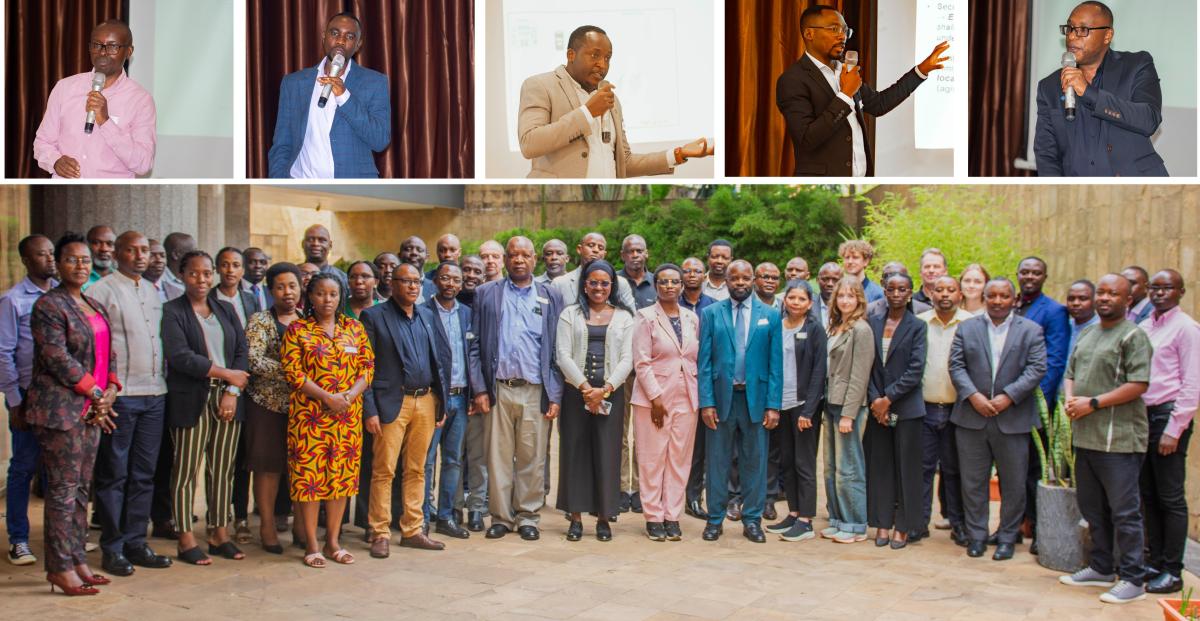
Their presentations highlighted a range of transformational studies, including advanced flood-management mechanisms designed to reduce impacts on homes, infrastructure, and human activity; new evidence on groundwater systems, Rwanda’s primary source of drinking and domestic water; and innovative approaches to safeguarding water quantity and quality. They also showcased research on water-treatment technologies and resource recovery from industrial wastewater; key solutions in promoting a circular, sustainable water economy.
Speaking at the event, Prof. Etienne Ruvebana, Senior Research Coordinator for the UR–Sweden Program, emphasized that the initiative is part of a broader commitment to ensuring research reaches the public and informs real-world solutions. He noted that research achieves meaningful impact only when scholars, private-sector and communities work hand in hand; each playing a role in translating findings into practice.
By the end of the seminar, participants had not only assessed Rwanda’s water-management strengths and gaps but also proposed actionable, collaborative solutions. The event once again reaffirmed the UR–Sweden Program’s dedication to connecting research with practitioners, policymakers, and communities.