In Rwanda; particularly in the Eastern and Southern Provinces, millions of people depend on groundwater for their daily needs. When this water is clean, it supports healthy families, productive agriculture, and reliable water supplies during periods of drought. However, in many areas, it remains unclear whether the water people drink and use for cooking is safe. This uncertainty has prompted Emmanuel Ngendahayo to study groundwater quality in order to understand what is in the water and how it can be protected before problems arise.
Ngendahayo is a PhD candidate at Lund University in Sweden under the UR–Sweden Program, a bilateral research partnership between Rwanda and Sweden.
He explains that groundwater is water hidden beneath the earth’s surface, filling tiny spaces in soil and cracks in rocks. It reaches the surface through springs, wells, and boreholes, making it one of the most important sources of water especially in areas where rivers, lakes, and streams are scarce.
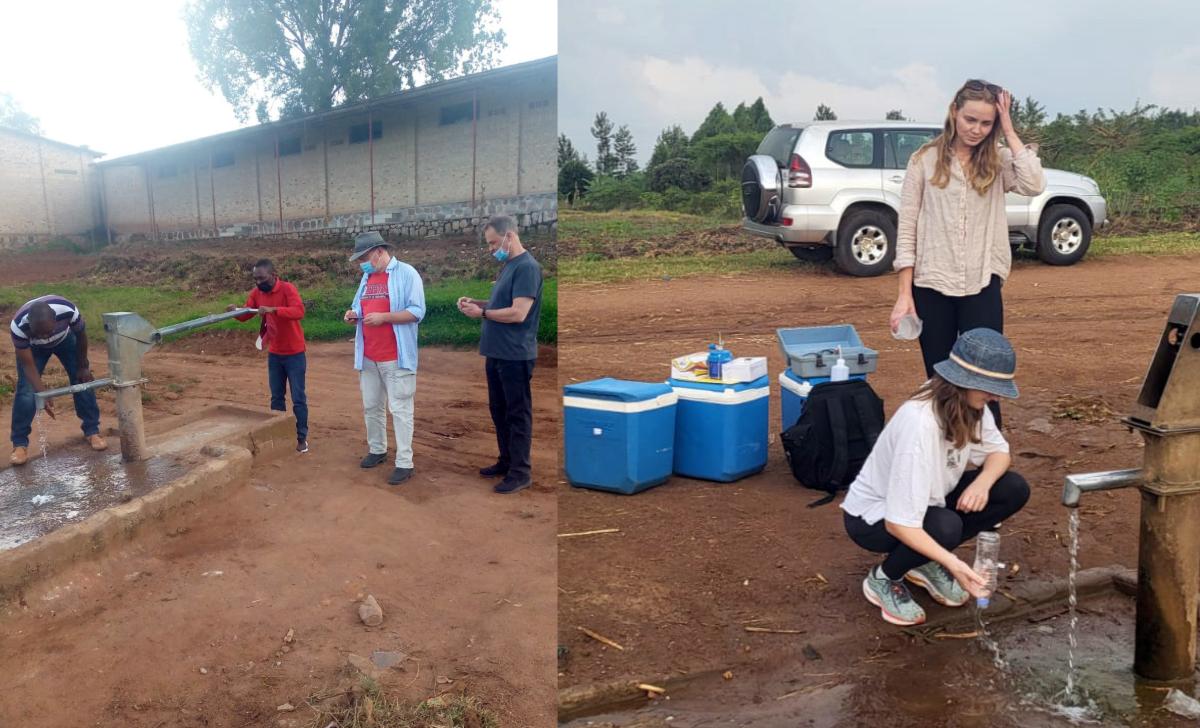
Ngendahayo, together with a research team, during data collection on groundwater
“Think of it as nature’s underground reservoir, slowly collected from rainwater that seeps into the earth,” Ngendahayo said.
The hidden challenge
According to Ngendahayo, groundwater is not regularly monitored, and contamination can remain undetected for many years. As a result, people may unknowingly consume water contaminated with harmful bacteria, chemicals, or naturally occurring elements such as iron, manganese, fluoride, arsenic, and others. This lack of information also makes it difficult for authorities to plan where to drill boreholes or how to manage water resources during droughts.
“In a changing climate, not knowing the condition of our groundwater leaves communities more vulnerable to water shortages and health risks,” he added.
Through his doctoral research titled “Hydrogeochemical Processes Governing Groundwater Quality: A Case of a Shallow Aquifer System in Southeastern Rwanda,” Ngendahayo aims to generate critical insights into how groundwater in southeastern Rwanda behaves by identifying areas where it is safe, where it is vulnerable, and the factors influencing its quality.
The findings of the study are expected to provide evidence-based guidance to policymakers, enabling them to design better water supply systems, protect groundwater reservoirs, and strengthen national water security. Ultimately, this research will help communities access safer and more reliable water.