Three academic staff from the University of Rwanda (UR) have earned doctoral degrees in June through the UR-Sweden Program; a longstanding bilateral research partnership between Rwanda and Sweden, contributing new scientific knowledge to address some of Rwanda's most pressing public health and environmental challenges.
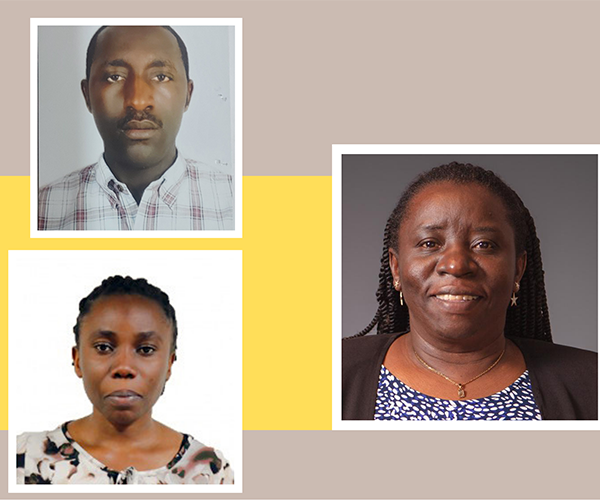
Dr. Brigitte Mukarunyana and Dr. Albert Ndagijimana got their doctoral thesis from Umeå University, while Dr. Colores Uwamariya received her PhD from the University of Gothenburg.
Dr. Colores Uwamariya's research explored how Rwanda's rich biodiversity could contribute to the global search for new antiviral medicines. In her doctoral thesis, Medicinal plants as source of antiviral substances against respiratory syncytial virus, she investigated Rwandan medicinal plants as potential sources of antiviral compounds against Respiratory Syncytial Virus (RSV), one of the leading causes of severe respiratory infections among infants and young children worldwide.
With treatment options for RSV remaining limited, her findings open new opportunities for the discovery of plant-based antiviral compounds that could support future drug development. The research also highlights the scientific value of indigenous medicinal knowledge while encouraging the sustainable use of Rwanda's natural resources in biomedical research.
Dr. Brigitte Mukarunyana focused on one of today's growing environmental concerns; water pollution. Her doctoral thesis, Biochars and hydrochars for the adsorption of organic contaminants from wastewater, presents an innovative and environmentally friendly approach to wastewater treatment by converting agricultural waste into highly effective materials capable of removing organic pollutants from contaminated water.
By transforming agricultural residues into low-cost water purification materials, her research promotes a circular economy where waste is converted into valuable products. The findings have the potential to improve access to cleaner water, reduce environmental pollution, and provide sustainable wastewater treatment solutions for communities and industries alike.
Meanwhile, Dr. Albert Ndagijimana's research addressed childhood stunting, one of the most persistent public health challenges affecting children's growth and development. His doctoral study, Integrating spatial, classical and social epidemiology, machine learning, and qualitative approaches to understand childhood stunting in the Northern Province of Rwanda, combined advanced data analysis, epidemiology, machine learning, and qualitative research to identify the complex factors contributing to malnutrition among children.
The study provides evidence for more localized and family-centered interventions by recognizing that childhood stunting is influenced by a combination of health, social, environmental, and geographic factors. Its findings can support policymakers, health practitioners, and development partners in designing targeted nutrition programmes that improve child health and contribute to Rwanda's efforts to reduce malnutrition.
The three scholars join a growing community of researchers developed through the UR–Sweden Programme, which aims to strengthen research capacity and produce evidence that informs policy, innovation, and sustainable development.
The Rwanda–Sweden bilateral research partnership has played a pivotal role in strengthening research and postgraduate education at the University of Rwanda by supporting doctoral training, collaborative research, institutional development, and international academic exchange.