LATEST NEWS

UR /Sweden meet to assess the impact of research collaboration

The University of Rwanda and Sweden partners are gathered in Kigali for a five-day Annual Review Meeting to assess the progress of Sweden support to the University of Rwanda for the year 2017-2018. The meeting is inline with the existing collaboration, which aims among others to improve UR research and staff capacity for the development of Rwanda.

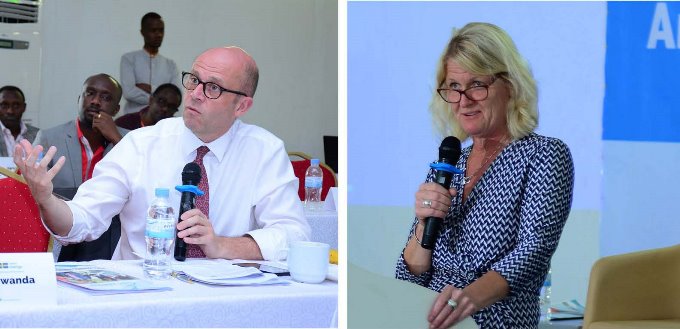
The meeting was officially opened by Prof Philip Cotton, the University of Rwanda Vice Chancellor who expressed his gratitude for the trust and dedication of the Government of Sweden towards the advancement of research for the development of Rwanda. 

Speaking on the occasion, Ms Christina Wedekull the Head of Development Cooperation at Sweden Embassy noted that the Embassy endeavours to support Rwanda to reach its aspirations of becoming a middle-income country by 2035 and high-income country by 2050. According to her, investing in skills development, science, technology and innovation is key to achieve set targets.
Untitled-1_0_1.jpg

Prof Philip Cotton (UR) and Ms Christina Wedekull (Sweden)

She also underlined the need for regarding and protecting academic freedom, which will allow the university to fulfil its responsibilities by promoting critical thinking and debate. “As home of knowledge generation, universities are well placed to analyze decisions and policies and provide suggestions for improvement,” she said. 

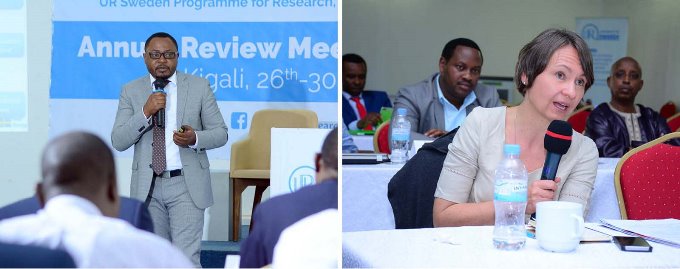
In her remarks, Dr Emilia Molnar the Senior Programme Manager for Research and Higher Education at the Embassy of Sweden said that the Embassy supports UR in its goal of becoming a research-led University and play a significant role in the development of Rwanda. She also informed participants about the rationale of the meeting being an opportunity to assess the Programme previous year results, discuss encountered problems and jointly look ways for addressing them with the Management of the University of Rwanda.

“There is a need for environment and institution change so that research could thrive” Molnar said. 

In his presentation, Mr Raymond Ndikumana, the Overall Coordinator of UR-Sweden Programme presented the genesis of the Programme from way back in 2002. He recalled that it started as an emergency support to Rwanda and was paying salaries of former National University of Rwanda staff especially expatriates.  Currently, The Programme aims to support UR to become an effective player for the development of Rwanda by creating good conditions that promote research and postgraduate training.
Untitled-2.jpg

Mr Raymond Ndikumana and Dr Emilia Molnar

In the course of sixteen years, the support of the Government of Sweden has enormously propelled the University of Rwanda to a new level. In the area of postgraduate training, it has now produced 52 PhD. The programme has also supported the University research environment by providing ICT and library support through staff training and purchasing of equipment. The support is channeled through sixteen sub programmes, which are jointly led by Rwandan and Swedish team leaders.
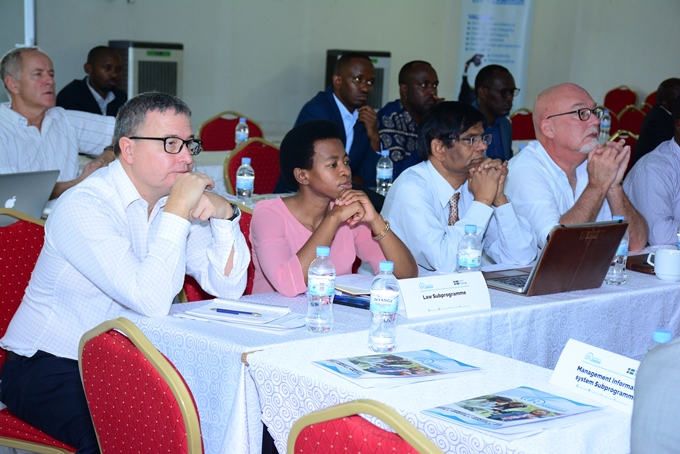
SAL_8506_0.JPG

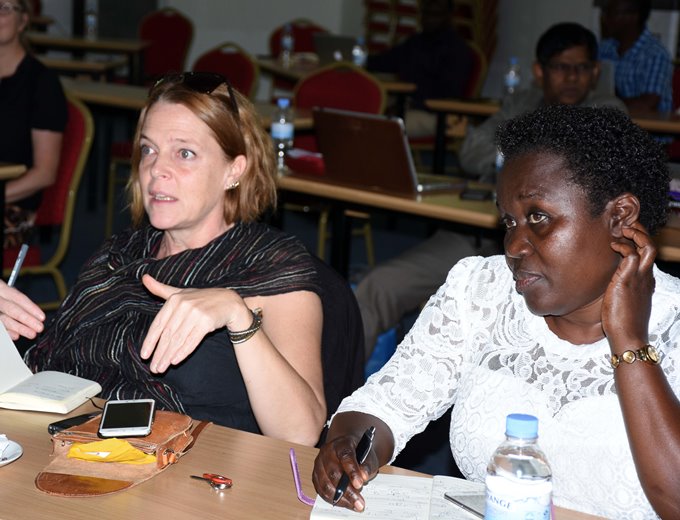
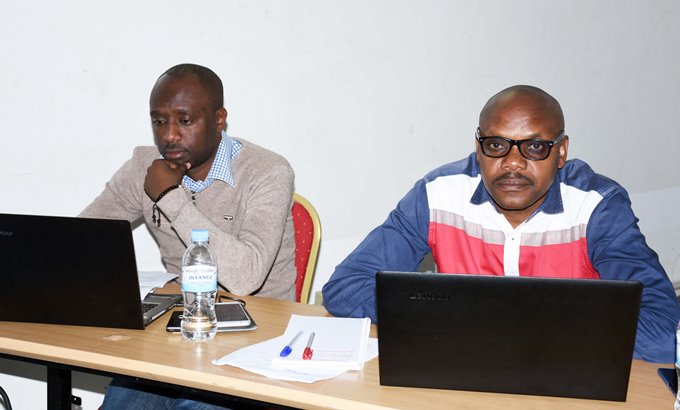
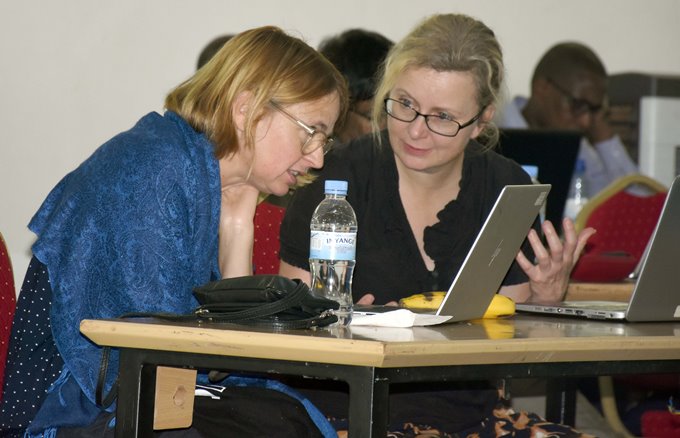
Section of participants in the meeting
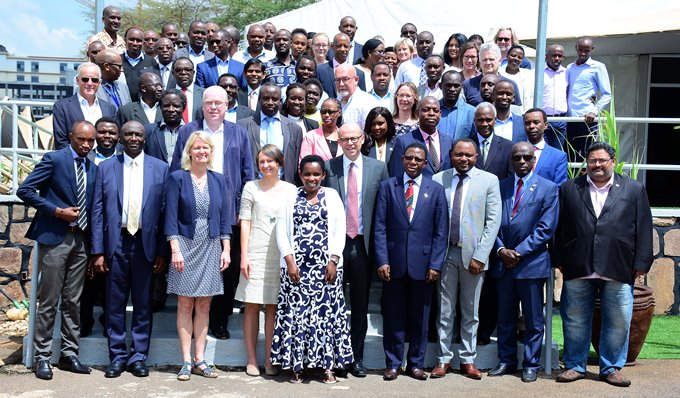
SAL_8551.JPG

Group Photo

By  Darius Murangwa
Communications Officer
 

UR team up with Swedish varsities for a new research chapter towards Economic transformation of Rwanda

Research cluster champions at the University of Rwanda and their Swedish counterparts met to finalize full proposals in line with the upcoming 5 year support agreement by the Government of Sweden. The move follows the acceptance of UR 35 letters of intent that were submitted in the quest for strengthening institutional research capacity at the UR.

In his remarks, Mr Raymond Ndikumana who is the Overall Coordinator of UR-Sweden Programme noted that the next phase of Swedish support to UR is poised to build research capacity leading to poverty reduction and economic transformation of Rwanda.  He added that the potential agreement will also contribute to UR becoming a research led institution which will trigger research that contributes to evidence based policies.

DSC_3697.JPG

Mr Ndikumana sharing his thoughts about the new agreement

Speaking on the occasion, Veronica Trépagny, the team leader of Library Subprogramme said that the focus of their subprogramme in the next support is to build relationship with academics and students at all levels and ensure that they make use of available resources.

DSC_3727.JPG

Ms Trépagny (left) and Dr Namuleme, the UR librarian during the meeting

“We are looking at a library that gives support in academic writing, anti- plagiarism and other needed academic research tools such as statistic data etc.,” she said.

Trépagny also added that they are on the verge of communicating and share all the research that have been done in the University of Rwanda ranging from bachelor’s dissertation up to PhD thesis. According to her, the move will also see all research and published papers digitized and made available through the University repository.

Daton Ngilinshuti is the team leader of ICT infrastructure at the University of Rwanda. His subprogramme has been a major driver of research at UR in that it increased the usage of ICT resources, upgraded the ICT infrastructure and built capacity of ICT staff. In the next support agreement, ICT infrastructure is part of the Research supporting component alongside Library and Innovation.

Under the new appellation “ICT Infrastructure and Business Solutions” the sub-programme will integrate research, students, administration and finance in order to alleviate university services and make sure that research can be conducted in a relatively conducive environment. 

DSC_3684_0.JPG

Mr Ngilinshuti (Left) and Dr Minani, Team Leader Applied Maths and Statistics

“We are going to ensure that academic, administration and finance businesses  are entirely incorporated in the system and running smoothly” Said Ngilinshuti, adding that his subprogramme will maximize the usage of available ICT solutions and focus more on the research-need.

The new 5 year agreement between UR and Swedish varsities through Swedish International Development Support Agency (Sida) under the coordination of UR-Sweden Programme is expected to start from 2019-2024. Currently 35 Letters of Intent have been selected and were invited to submit full proposals. All the proposals embrace national and regional priorities, global commitment such us SDGs and other crosscutting areas such as gender and environment.

DSC_3728.JPG

A section of research cluster Champions in the meeting

By  Darius Murangwa
Communications Officer
 

UR Innovation team members eye new partners to enrich their innovation projects

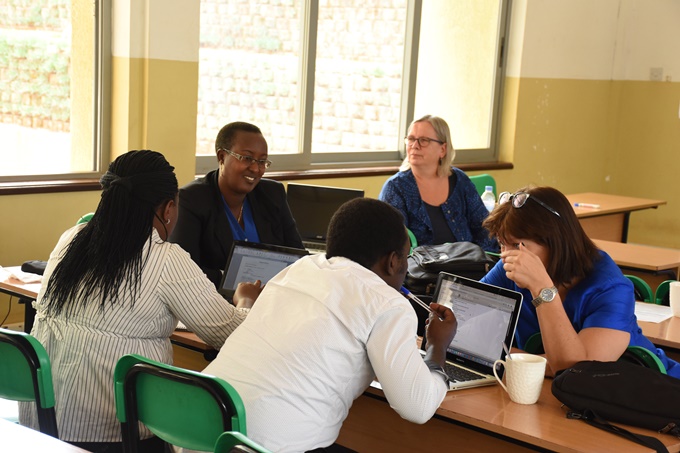
Academics who lead innovation projects at the University of Rwanda convened in a training workshop aimed to equip them with skills on ways to forge new research and innovation partners in order to give value and enrich their innovation projects. In collaboration with Södertörn University of Sweden, the training was organized by the Centre for Innovation and Entrepreneurship in line with its role to complement to the University mandate to produce skilled and versatile graduates who can do research that leads to innovation with entrepreneurship and job creation mindset.

DSC_3622.JPG

UR academics with their counterpart from Södertörn University-Sweden

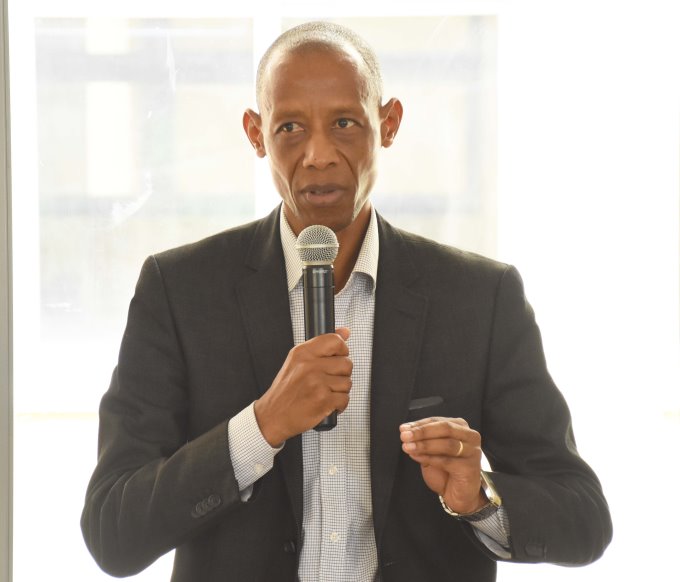
In his remarks, the Innovation Centre Director Dr Emile Bienvenu noted that participants were able to acquire new ways to build collaboration with university partners to boost innovation. According to him, the bottom line about innovation is to respond to people’s needs and improve their wellbeing. He therefore called for connecting breakthrough innovation to the intended audience and community in large.   

DSC_3617.JPG

Dr Bienvenu sharing his thoughts during the workshop

“An innovation that doesn’t solve community problems or alleviate the way people do things is null and void,”said Bienvenu, adding that innovation only makes a significant impact if there is consultation and studies to find out people’s need.

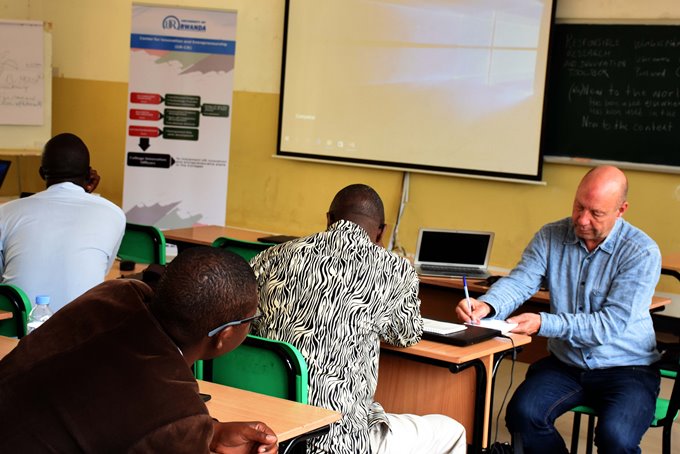
Among the training facilitators was Dr Tomas Kjellqvist, a long serving researcher with vast experience in research collaboration especially in working with the Swedish International Development Cooperation Agency (Sida). He closely works with the UR Inovation Centre and noted that one of the Centre’s mission is to get the research into use in Rwandan society.

DSC_3624.JPG   

Dr Kjellqvist ( right) and other training participants

“We are now trying to get some projects out of the university which can serve the Rwandan society” Kjellqvist said.  

Dr innocent Ndahiriwe is one of the innovation project leaders who attended the workshop. He is working on his innovation project “Innovation through bee farming, the way forward for poverty reduction in Rwanda” under the support of UR-Sweden Programme for Research Higher Education and Institutional advancement. Ndahiriwe formed two cooperatives in two different districts of the country and membership majority is the university graduates. He believes in his project to translate knowledge and theoretical skills into practice to enable graduates be real entrepreneurs.

His advice to graduates is to move away from the mindset that rates cities to be land of opportunities but rather encouraged them that they can thrive by developing projects touching people in rural settlements because of available competitive advantage in terms of market and labor.

In the course of the workshop, innovation team members presented the progress of their projects and showed the way forward about the research that they have set to do. Currently, the Centre counts 15 innovation projects that cover almost any discipline ranging from technology up to social innovations. Innovation projects are expected to forge partnership with various institution and individuals in the society so as to have prototype and better ideas that could make them move forward.

DSC_3623.JPG

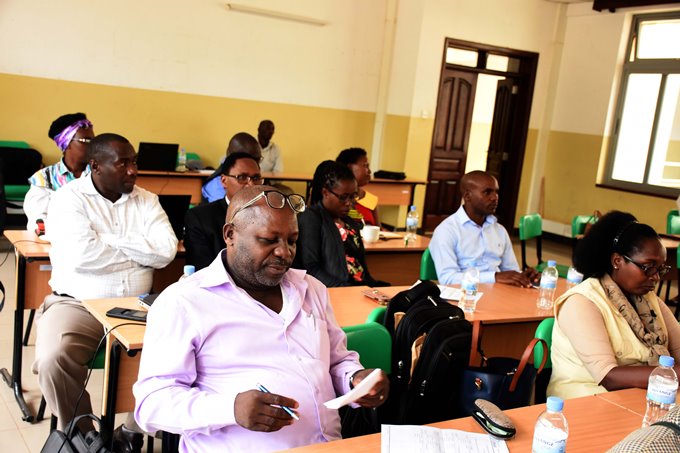
A section of participants in the training

DSC_3658.JPG

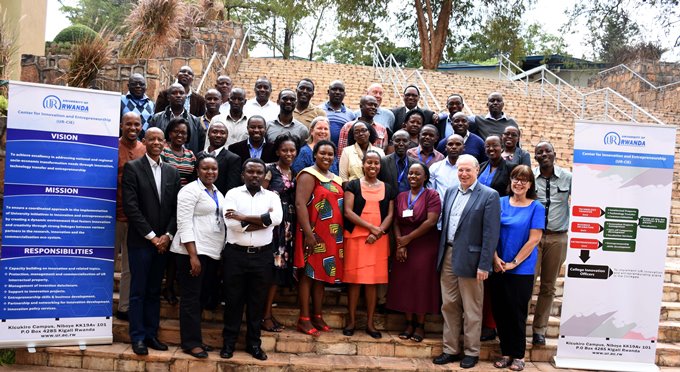
Training participants group photo

By  Darius Murangwa
Communications Officer