The University of Rwanda in collaboration with Sweden Programme organized a consultative meeting with various stakeholders. The meeting aimed at presenting the concept note about the extension of Sweden support to the University of Rwanda through UR-Sweden Programme for Research, Higher Education and Institutional Advancement.
In his remarks during the concept presentation, Dr Charles Murigande appreciated the Swedish collaboration which enabled the University of Rwanda to contribute in finding solutions of critical challenges that the country is facing. Murigande who is the University of Rwanda Deputy Vice Chancellor for Institution Advancement further observed that the concept encompasses vital components that will allow the University to generate knowledge about home grown solutions. According to him, the University has made tremendous progress but the aim is still high.

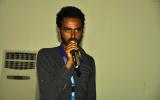
Dr. Murigande during the presentation.
"We have grown up, we laid the foundation but we are not where we need to be" He said, adding that the University is moving towards complementing the country’s efforts to move away from agriculture based economy towards knowledge and the skills based economy.
On this occasion, Mr. Mikael Boström, the Head of Development Cooperation in Rwanda at Swedish Embassy hailed the concept design and encouraged the University to incorporate some of crosscutting items like gender, climate change and aspects on home grown solutions.

Mr.Boström and Dr Emilia (in front)during the meeting.
Dr Emilia Molnar, the Senior Programme Manager for Research and Higher Education at Swedish Embassy appreciated the University progress and called for ensuring that the concept is aligned with country’s strategies to address national development challenges.
In his presentation about the University of Rwanda, Prof Phil Cotton the University of Rwanda Vice Chancellor underlined the contribution of UR-Sweden Programme to the milestone that the University has recently achieved. He added that since its inception, UR has evolved to be an institution with high impact to the community by nurturing talents and skills of young people who contribute to the development of the country.

The Vice Chancellor’s remarks during the meeting.
Among the key guests in the meeting was Her Excellency Christine Nkulikiyinka, the Rwanda Ambassador to Sweden. She commended the University collaboration with Sweden Programme and noted that the partnership is of paramount importance since it captures research as one of the key drivers for the development of the country.
The concept note presentation follows the resolutions taken during Annual Review Meeting between UR and UR Sweden programme back in October 2016. By then, an agreements was made to extend the support for more 5 years on the current Programme Support which is ending in 2018.
More event photos

Group photo_ from left Mr Raymond the Overall Coordinator of UR-Sweden Programme, Prof. Cotton, Amb. Nkulikiyinka and Dr Murigande.

Invited stakeholders also provide some inputs_ here the DG of Workforce Development Authority.

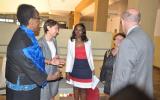
Moment of discussion between the Ambassador, the Vice Chancellor and Swedish Embassy delegates.

Mr Godfrey Kabera the DG in MINECOFIN during the presentation.

The Vice Chancellor chats with the Amb. Nkulikiyinka before the presentation of the concept.
By Darius Murangwa
Communications Officer