LATEST NEWS

UR-Sweden sign 5-year cooperation deal to boost research and professional skills development

The University of Rwanda has been granted Frw 31,5 Billion by the Government of Sweden to boost research and use of scientific knowledge in Rwanda under the existing UR-Sweden Programme. The 5-year bilateral collaboration in research and higher education was witnessed by Rwanda Finance Minister Dr Uzziel Ndagijimana and Swedish ambassador to Rwanda H.E Jenny Ohlsson.  

The UR-Sweden Programme, which started in 2002, is the longest cooperation between Rwanda and Sweden. So far, the collaboration has culminated into 67 PhD and 302 masters graduates and supported UR in its development since its establishment in 2013 in areas of research, putting in place policies, ICT development and capacity development

In her remarks, Jenny Ohlsson noted that the support aligned to Rwanda's ambition to transform the country to a knowledge based economy. According to her, modern knowledge based economy requires investment in research and professional skills development; key for reaching the Sustainable Development Goals.

“Investment in knowledge is key for development in any country and globally for reaching the SDGs” she said.
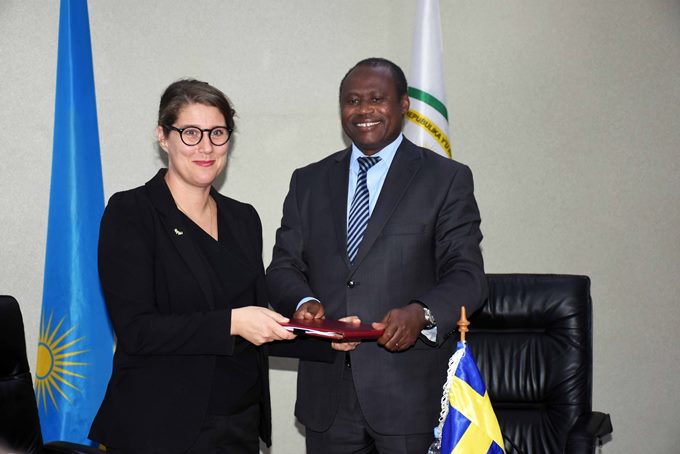
DSC_1215.JPG

Amb. Jenny Ohlsson and Dr Uzziel Ndagijimana during the agreement

The Minister of Finance and Economic Planning, Dr Uzziel Ndagijimana said that Programme supports Rwanda’s ambitions to develop into an innovative knowledge society and aims to increase the production and use of scientific based knowledge to contribute to Rwanda’s development.

Amb. Dr Charles Murigande, UR Deputy Vice Chancellor for Institutional Advancement informed that the agreement will complement to UR ambition to train more people to attain PhD level in order to create a critical mass of people who can do research on issues affecting the country.
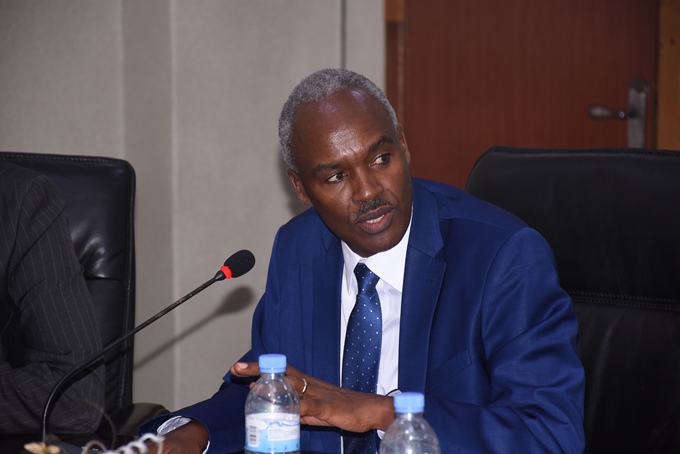
DSC_1224.JPG

Amb. Dr Charles Murigande made some interventions during the agreement

Speaking on the occasion, Raymond Ndikumana the Overall Coordinator of UR-Sweden Programme noted that the coming 5 year phase is expected to train 80 PhD candidates compared to 52 PhD that were enrolled during the previous phase 2013-2018.
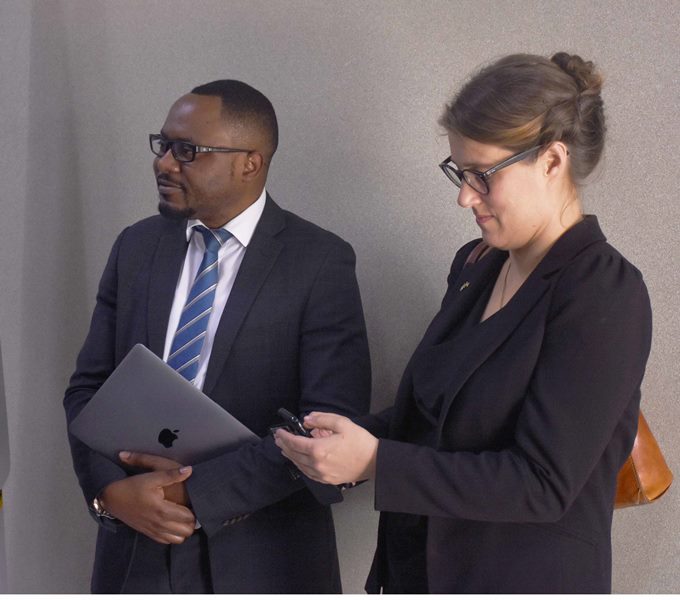
DSC_1232.JPG

Raymond Ndikumana together with Amb. Jenny Ohlsson after signing the agreement

“This will definitely build foundation and capacity for UR to deliver on the Rwanda National Development Agenda” Ndikumana said.

Apart from PhD training, master’s programmes will also be supported in collaboration with 14 Swedish partner universities. The 4th phase will equally support ICT infrastructure, which will integrate research, students, administration and finance in order to alleviate university services and make sure that research can be conducted in a relatively conducive environment. 
Stockholm-PhD graduates and students discuss the impact of their research during science day

For six consecutive times, the Embassy of the Republic of Rwanda in Sweden in collaboration with UR-Sweden Programme organized the Science Day event. The recurrent event brought together recent PhD graduates and students to present the community impact of their research and talk about their PhD training experience in Sweden.

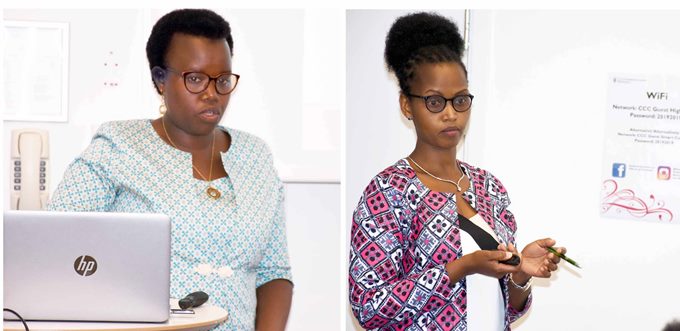
Dr Florence Uwamahoro kicked off the Research presentations in the science day. In her research “Banana Xanthomonas wilt & potato bacterial wilt in Rwanda” Florence provides good practices against potato & banana diseases in Rwanda to help farmers secure food and income

Florence was followed by Dr Judith Mukamurigo who presented her research topic “Quality of intrapartum care in Rwanda: Management & Women's experiences". Her research proposes strategies to improve the health system in terms of maternal health care especially around childbirth in Rwanda.

judith and florence .jpg

Dr Florence (L) and Dr Judith presenting during Science day 

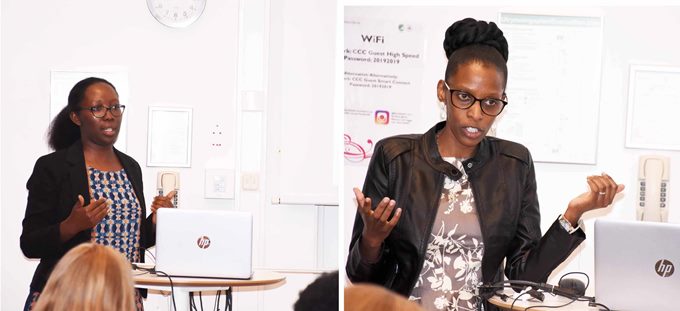
The science day event also featured presentations by Dr Chantal Mutimukwe along with Solange Mukamurenzi who made presentations in e-Government field. Mutimukwe presented her research findings on information privacy protection practices from e-Government users while Mukamurenzi took the audience through Government service Evaluation in a broad perspective in Rwanda

Chantal & solange .jpg

Solange (L) and Dr Chantal made presentations on e-Government in Rwanda 

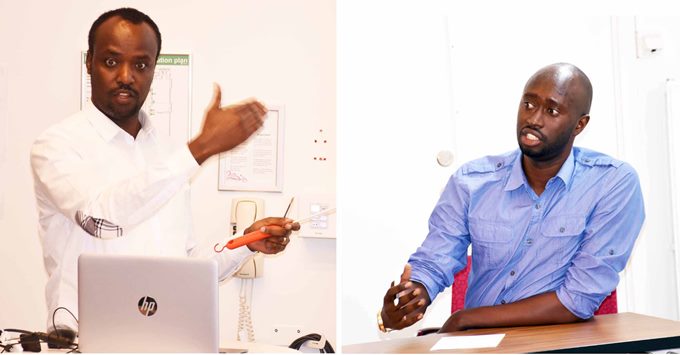
Our PhD students also made presentations respectively on Multi-resolution earth observation data for urbanization monitoring & environmental impact analysis by Theodomir Mugiraneza while Parfait Yongabo presented on the role of research Management and innovation uptake. Yongabo noted that good policies should be coupled with implementation capacity and provision of related tools and instruments to ensure good results.  He also rated the Triple Helix Model: University-Industry and Government to be an effective model in the Rwandan context.

Theo & parfait .jpg

Theodomir (L) and Parfait also made presentations in science day 

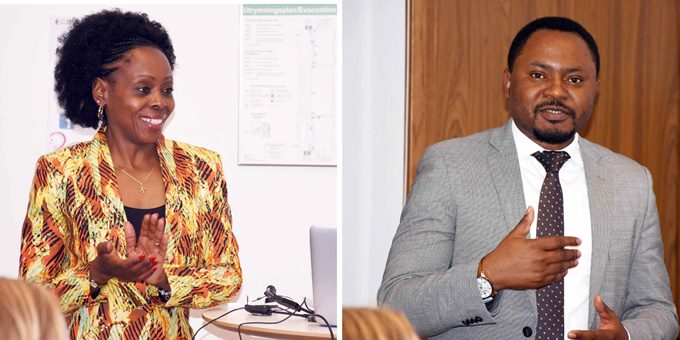
Speaking on the occasion, H.E Christine Nkulikiyinka, the Ambassador of the Republic of Rwanda to the Nordic countries expressed her satisfaction about the impact of research presented for the community benefit. Nkulikiyinka who spearheaded Science Day events by convening Rwanda PhD graduates and students in Sweden noted that the only way for research to be impactful is to ensure that they are disseminated to beneficiaries. 

In his remarks, Raymond Ndikumana noted that the research impact discussion is gradually gaining momentum thanks to forums such as science day. Ndikumana who serves as the Overall Coordinator of UR Sweden Programme added that beyond the number of PhD graduates, there is impactful research that are being carried out to respond to community needs.

 “Topics that are being tackled relate to the context of Rwanda with an emphasis towards the development of the nation and ultimately contributing to eradication of poverty,” He said 

Amb & Raymond .jpg

Amb. Christine and Raymond made few remarks during science day 

The science day was also an occasion to reflect on the 67 PhD graduates in total produced through the bilateral collaboration between Rwanda and Sweden under the coordination of UR-Sweden Programme. The Collaboration is gearing towards a five year new phase which is expected to enroll 80 PhD candidates with substantial investment in ICT and research environment.

Configure

Over 40 Schools of law deans and senior judges meet for the Legal Interface to discuss contemporary legal matters in education

The University of Rwanda hosted a high-level legal interface workshop that brought together more than 40 Deans of Law faculties and Senior Judges from around the world. The workshop was organized by UR School of Law under the support of UR-Sweden Programme through its Law Subprogramme and the International Association of Law Schools-IALS.

The legal interface workshop was officiated by Rwanda Chief Justice Prof Sam Rugege and engaged participants in discussions about various legal themes aimed to get ideas from practitioners who have links with the legal education. It also marked a side meeting featuring Deans of law schools and faculties who focused on the best ways to implement the agreed standards in the manner that may lead towards the uniformity of the legal education with high and desired quality of Legal education.

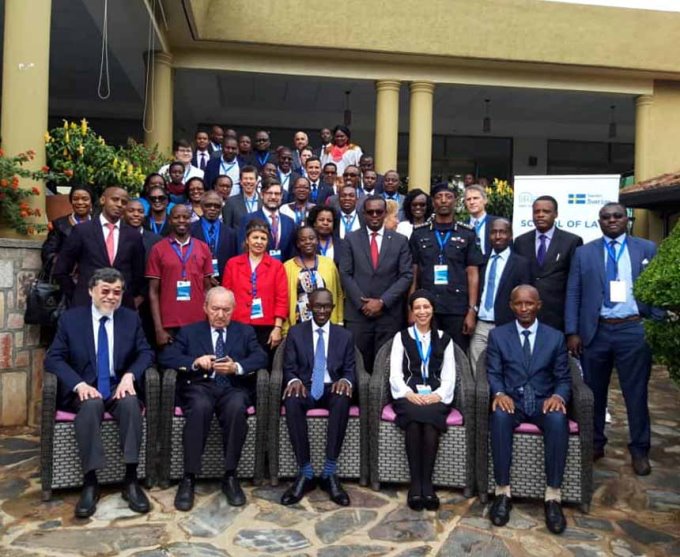
60863131_2016482331789930_3599615518161502208_n_0.jpg

Participants in the legal interface pose for a group photo

The workshop provided an opportune occasion for the UR School of Law to work with Schools outside the country who have participated in putting in place various declarations and protocols and standards relevant to the legal education on various themes. Among the themes on the table included the discussion on Global Standards and Outcomes of the Legal Education, principles of Evaluation of a Legal Education, Judicial Standards on a Legal Education, Evaluation, Assistance and Certification to mention but a few.

Speaking on the occasion Dr Denis Bikesha, the Dean of School of Law at the University of Rwanda extended his appreciation for the encouraging turn up to the interface and noted that challenges in legal education should be discussed and resolved by legal educationists.

This interface follows the School of Law application to become a member of the Association of Law Schools back in 2018 and was accepted with immediate effect. The IALS is an organization that was incorporated in October 2005 with its headquarters in USA but connects all Schools of Law worldwide. Its primary mission is to improve the quality of legal education through various activities conducted in partnership among those Law faculties/Schools.

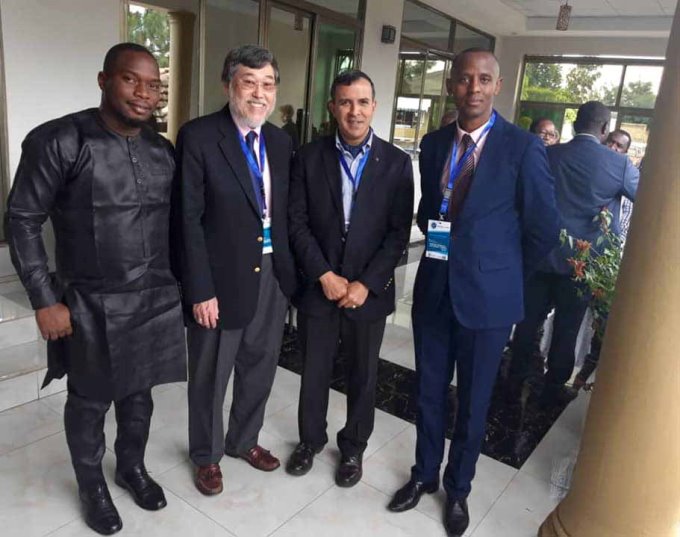
60849939_2016482421789921_4378998893786955776_n_0.jpg

Dr Etienne Ruvebana (R) key organizer of the interface and former Dean of Law at UR ; he is now leading the Law subprogramme under UR-Sweden Program. Here together with other delegates 

Apart from hosting this international workshop, the School of Law has made bold achievements including research conducted its academic staff members in the development of new laws, forging MoUs with local stakeholders on working relationship in various areas. They include Institute of Legal Practice and Development - ILPD, Rwanda Investigation Board- RIB, Rwanda Law Reform Commission- RLRC and other projects in the pipeline such as the one initiated together with Stakeholders to build the School’s modern complex.