At a time when cities are struggling with mounting organic waste and farmers are facing rising input costs, a new study is exploring how both challenges can be turned into opportunity.
Theoneste Rutayisire, a staff member at the University of Rwanda and a PhD student at the Swedish University of Agricultural Sciences, is leading research on integrating urban organic waste streams into agriculture. His study is funded under the UR–Sweden Program, a bilateral research partnership between Rwanda and Sweden through the University of Rwanda.
The research focuses on Black Soldier Fly Larvae (BSFL) composting as a sustainable bioconversion technology. The project evaluates how green waste and faecal sludge can be safely transformed into valuable products, high-protein insect biomass for animal feed and nutrient-rich organic fertilizer for crop production.
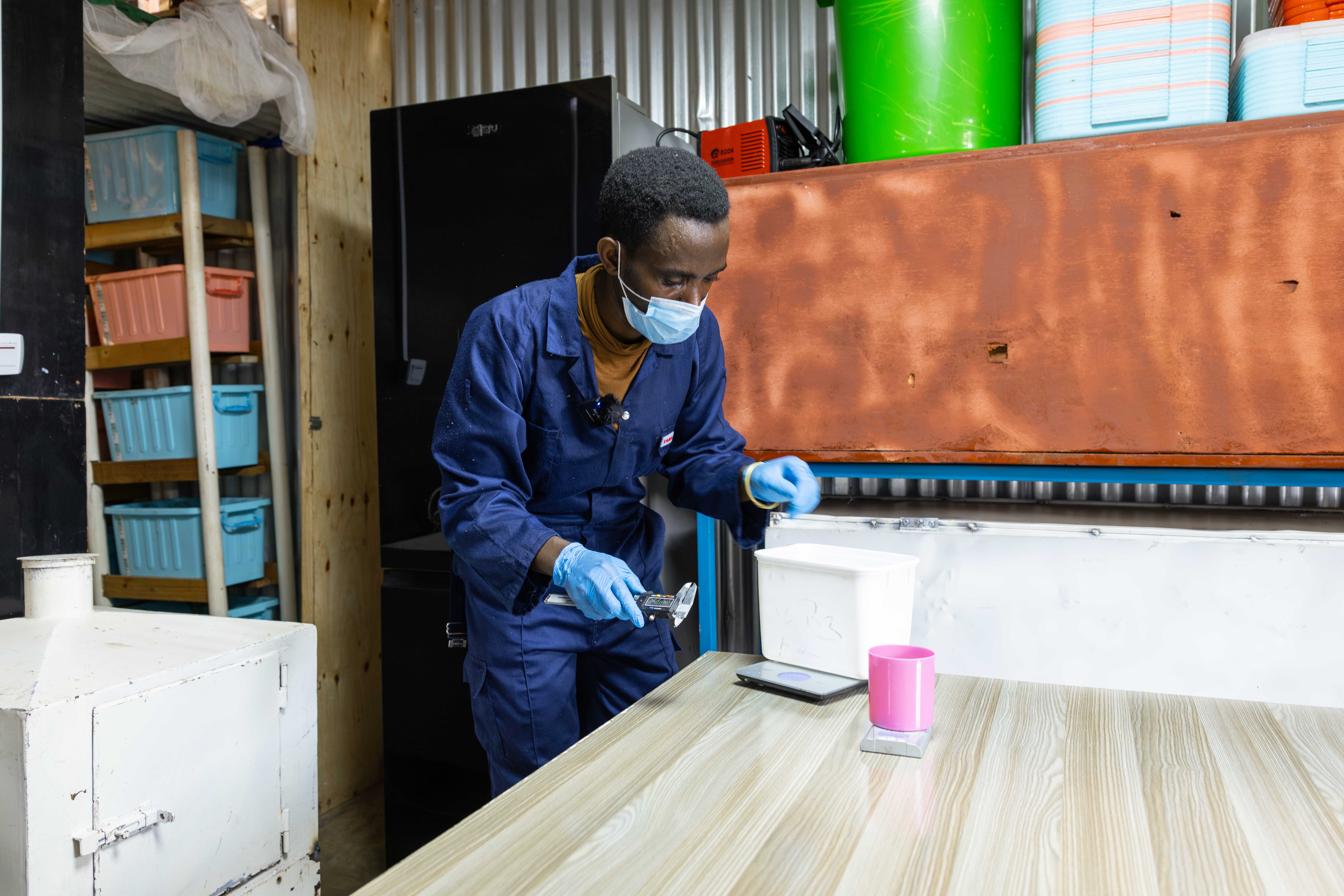
Rutayisire while conducting an experiment at his research site.
By converting waste into resources, the study aims to reduce greenhouse gas emissions linked to organic waste disposal and lower environmental pollution in urban areas. At the same time, it seeks to produce locally sourced protein for poultry, pig, and fish feed, helping reduce dependence on costly imports.
Beyond waste management, the research has strong implications for smallholder farmers. The organic fertilizer produced through BSFL composting is expected to improve soil fertility and boost agricultural productivity. The project also contributes to strengthening urban–rural nutrient loops, promoting a circular bioeconomy where waste from cities becomes a resource for farms.
Through evidence-based protocols tailored to Rwanda’s context, Rutayisire’s work demonstrates how science and innovation can support climate-resilient agriculture while addressing pressing environmental challenges.