LATEST NEWS

UR female academics meet to reflect on challenges preventing them to thrive

Female academics at the University of Rwanda held a forum to discuss about gender mainstreaming in academia. The discussions were particularly around challenges that women face in their professional career which impede them to have a career grow in research and in other academic endeavors.

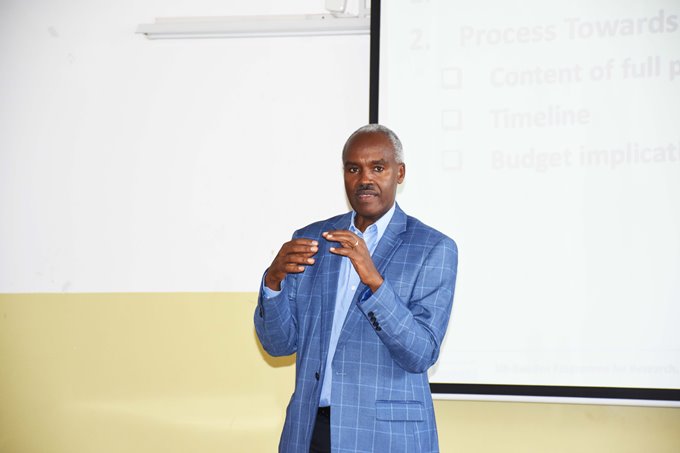
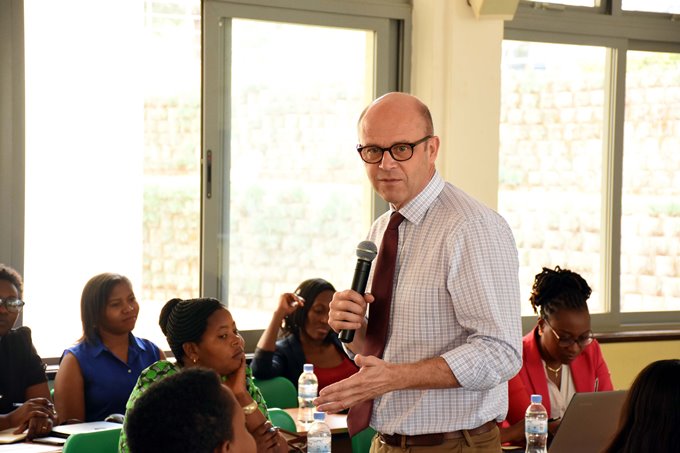
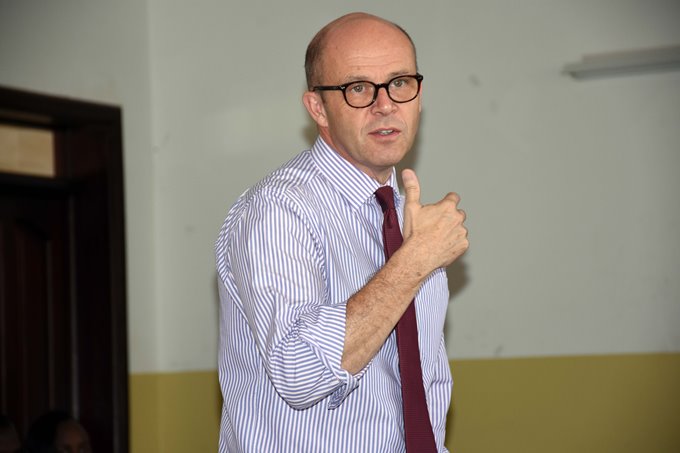
Speaking on the occasion, Prof Phil Cotton, the UR Vice Chancellor noted that no one should be held back or offended because their gender, faith or any category to which they belong. According to him, UR is the government institution based on the values of the nation, thus, there cannot be any disjunction between what UR does and what is done and embraced in Rwanda. 
DSC_3068.JPG

Prof Cotton during his remarks in the forum

“We have to try and find way of creating a university where all people are equal and stop recognizing differences,” he said, adding that UR have zero tolerance of any form of oppression to any category of people and to women and girls for that matter.

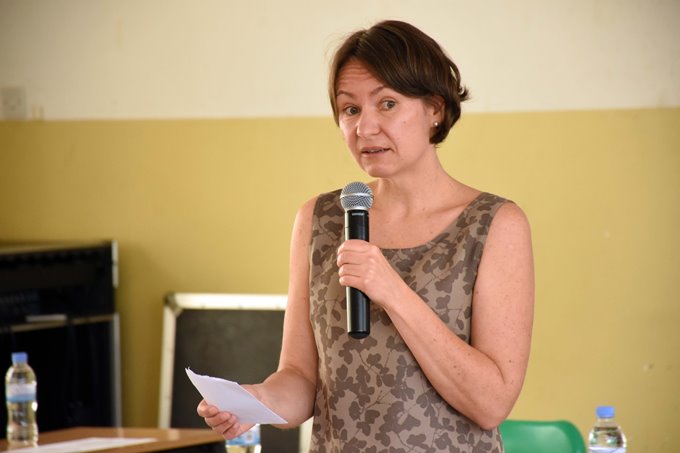
Among the invited guests in the forum was Dr Emilia Molnar from Swedish Embassy in Rwanda. In her intervention, she informed participants that Sweden is the world's first feminist government and put much emphasis on the importance of equality of rights between women and men. She called for giving equal opportunities, representation and participation to women while ensuring that resources can reach men and women at the same level. 
DSC_3052_0.JPG

Dr Molnar sharing her gender related experience during the forum

“The reason why women are not active in research is not that they are not able to do it but because they are not given opportunities,” Said Molnar who is the Senior Programme Manager for Research and Higher Education at Swedish Embassy. She also doubles as the representative of Sida, the major funding agency of research and capacity building to the University of Rwanda through UR-Sweden Programme.

Prof Nelson Ijumba questioned weird attitude in form of surprise toward the success of women in their business. According to him, there should not be anything to wow about since in early growing stages, young girls are always more clever and organized than boys.
multiphotos 4_0.jpg

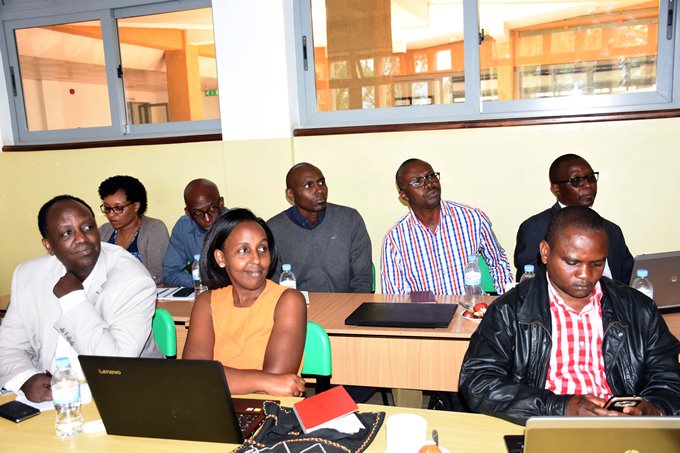
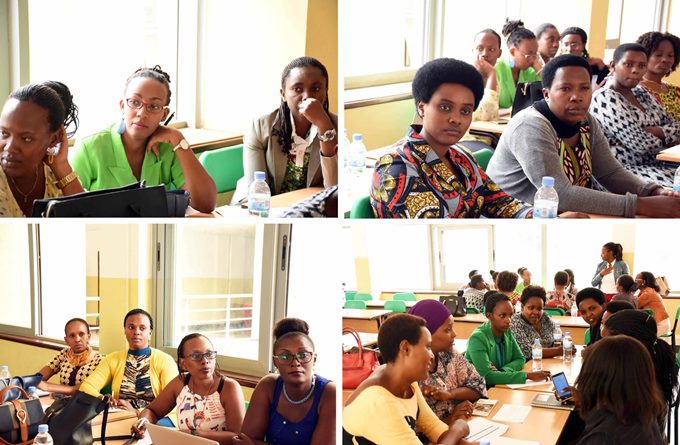
A section of participants in the forum

Ijumba who is the UR Deputy Vice Chancellor for Academics informed participants that UR counts plenty of women who are equally capable but they don’t come out and blossom because of a number of issues whose underpinning reasons were to be probed into by the present forum.   

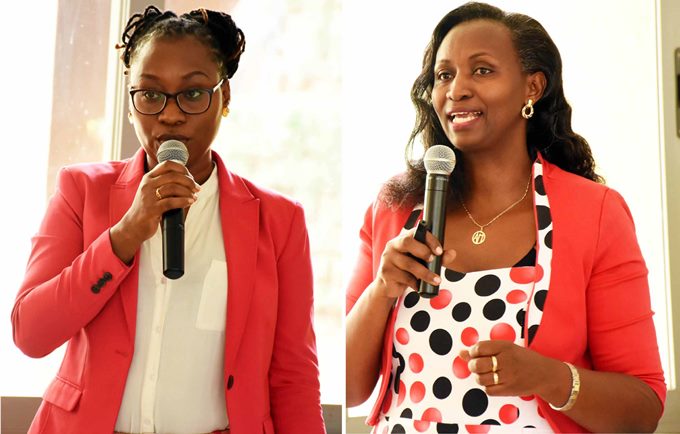
The forum marked a series of research presentations and surveys that ware conducted about women participation and representation in the University of Rwanda. Participants identified some of the key challenges that prevent them to propel including societal negative mindset towards women, failure in balancing family and career to mention but a few.
Untitled-2_0.jpg

Both Dr Bayisenge (Left) and Dr Kagwesage made presentations

By  Darius Murangwa
Communications Officer

Research cooperation between UR and Swedish universities gears on

The University of Rwanda held a meeting with researchers and managers to discuss another 5 year potential support by the Government of Sweden. The meeting was organized by UR-Sweden Programme around 49 letters of intent submitted in Sweden among which 34 were accepted for full proposals.

 The University of Rwanda Vice Chancellor expressed his heartfelt thanks to all players involved in the development of letters of intent. Prof. Phil Cotton noted that the milestone marks yet again the culture in Rwanda where things are done on time.  According to him, the University will continue to uphold the relationship with Swedish partners which has always been a two way open relationship.   

DSC_2862.JPG

Prof Cotton in his address to participants

 Speaking on the occasion Amb. Dr Charles Murigande said that the exercise of developing full proposals will benefit to the whole institution, despite individuals being involved, because the bottom line is the capacity building for the University Community. Murigande who is UR Deputy Vice Chancellor for Institutional Advancement called on the winning letters on intent to engage those that were not selected and ensure that multidisciplinary principle is adhered. Besides, he underlined that full proposals should reflect the existing mission and vision of the University of Rwanda.

DSC_2860.JPG

Amb. Dr Murigande's remarks on the occasion

 Mr Raymond Ndikumana who is the Overall Coordinator of UR-Sweden Programme advocated for full proposals to embrace national and regional priorities, global commitment such us SDGs and other crosscutting areas such as gender and environment.

DSC_2887.JPG

Ndikumana Raymond during presentation

 Letters of intents are nested into ten established research clusters that are expected to boost interdisciplinary research approach for Rwanda economic growth and social transformation.

More about Letters of Intent invited to submit full proposals: Click here

DSC_2877.JPG

A section of University academics in attendance

By  Darius Murangwa
Communications Officer
UR launches Rwanda handbook of economic and social policy

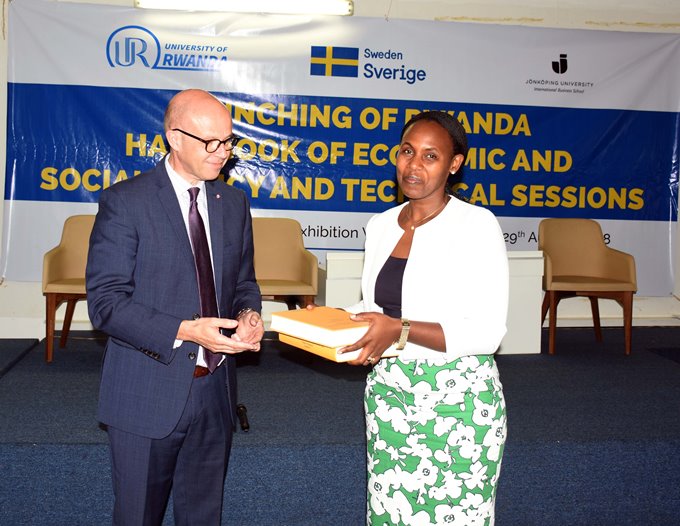
29th August, 2018- The University of Rwanda-College of Business and Economics launched the 1st volume of Rwanda handbook of Economic and Social Policy. The721 page research book was launched in the presence of the Minister of State in charge of Economic Planning from the Ministry of Finance and Economic Planning who was the guest of honour.

Speaking during the event, Hon Dr Claudine Uwera, the Minister of State in charge of Economic Planning in the Ministry of Finance highlighted the significant linkage between research and policy. She advised participants to ensure that research being carried out plays a critical role in Rwanda’s journey towards poverty reduction while becoming a fundamental tool to support the implementation of Government policies.

In his address during the launch, Prof Phil Cotton UR Vice Chancellor advocated for the reduction of amount of time for research to be translated into policies.  He also called on the researchers to invest time in research that leads to evidence based policy and to improve the research methods by carrying out research that really matters for the community welfare.

DSC_2479.JPG

The launch of the book by Prof Cotton (R) and  Hon Dr Uwera

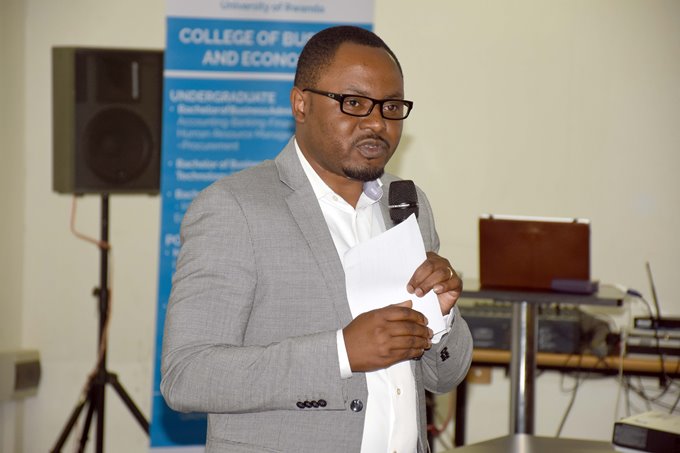
According to Mr Raymond Ndikumana, the dissemination of research findings to the beneficiaries and engaging policy makers and relevant partners is the most important part of the research. Ndikumana who is the Overall Programme Coordinator of UR Sweden Programme pointed out that the Programme has supported more than 100 people to do their PhD studies which is a huge boost in cementing the culture of research in Rwanda. It is worth noting that the guest of honour is one the products of the programme as she completed her doctorate studies at the University of Gothenburg in Sweden thanks to the Support of UR-Sweden Programme for Research High Education and Institutional Advancement.

DSC_2467.JPG

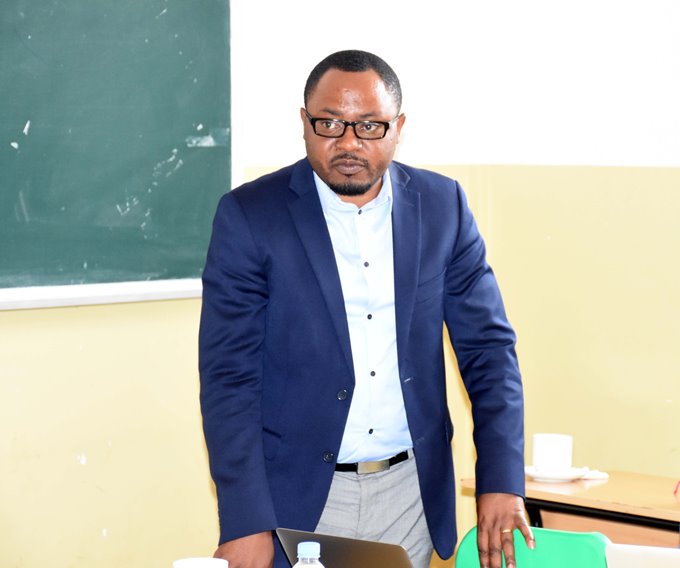
Mr Ndikumana, the Overall Coordinator UR-Sweden Programme

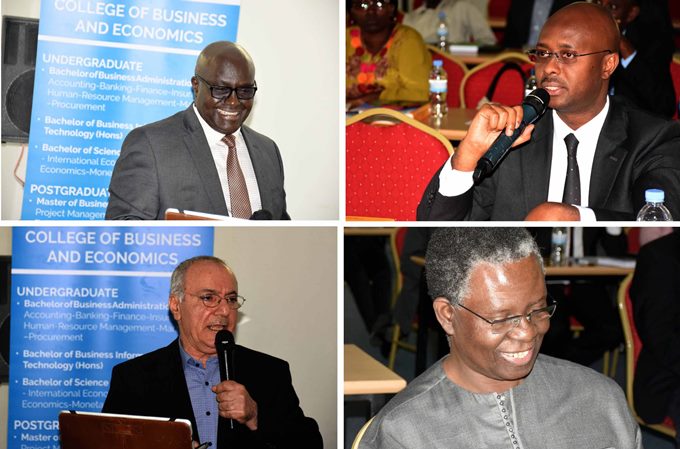
Among other key participants in the launch include Prof Thomas Kigabo the Chief Economist from the National Bank of Rwanda, Mr Yussuf Murangwa the DG of Rwanda National Institute of Statistics, Mr. Fodé Ndiaye UN Resident Coordinator and Prof Almas Heshmati, the handbook editor and one of the leading global economist.

multiphotos 4_2.jpg

From top left-clockwise Prof Kigabo, Mr Murangwa, Mr Ndiaye and Prof Heshmati

The handbook initiative was steered by Prof Rama Rao and Lars Hartvigson both team leaders of Economics and Management Subprogramme  from  UR and  Jönköping University respectively. The Rwanda handbook of Economic and Social Policy” comprises research papers by UR academics that include topics on Sustaining vision 2020 achievements, Wellbeing Livelihood Diversification,  Labor,  Job creating Growth to mention but a few.


By  Darius Murangwa
Communications Officer