LATEST NEWS

UR celebrates 20 years of bilateral research cooperation between Rwanda and Sweden

The University of Rwanda in collaboration with the Embassy of Sweden to Rwanda held a celebration mega event of 20 years of bilateral research cooperation between Rwanda and Sweden under UR-Sweden Program. Over three consecutive days, participants had an opportunity to reflect on key milestones registered in research and capacity building from the last 2 decades.
IMG1.jpg

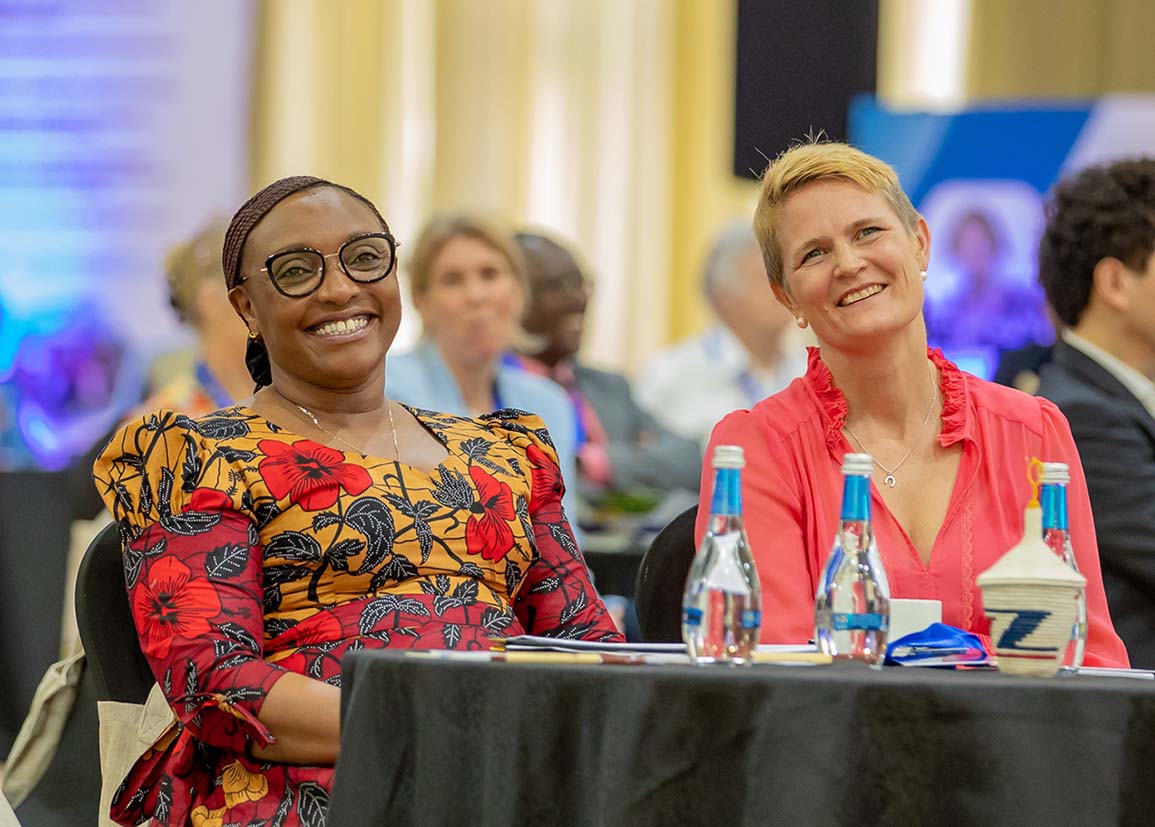
Nice to watch : Minister of Education and Ambassador of Sweden to Rwanda

The event was officiated by the Minister of Education Hon. Dr Valentine Uwamariya who acknowledged the Government of Sweden, represented by Ambassador of Sweden to Rwanda in the event ; for being among the first partner countries to respond to Rwanda’s call for support in the aftermath of Genocide against the Tutsi.

“The cooperation achieved tremendous milestones in terms of promoting research and developing the capacity for Rwanda’s human resource” she said.

Speaking on the occasion, H.E Johanna Teague, the Ambassador of Sweden to Rwanda expressed her satisfaction for PhD graduates from the cooperation who are now holding important positions in key institutions in Rwanda.

"Sweden is so fortunate to have had - and keep having – the opportunity to partner up with Rwanda around human capital development, the very core of society and basis for nation building," She noted.
IMG2.jpg

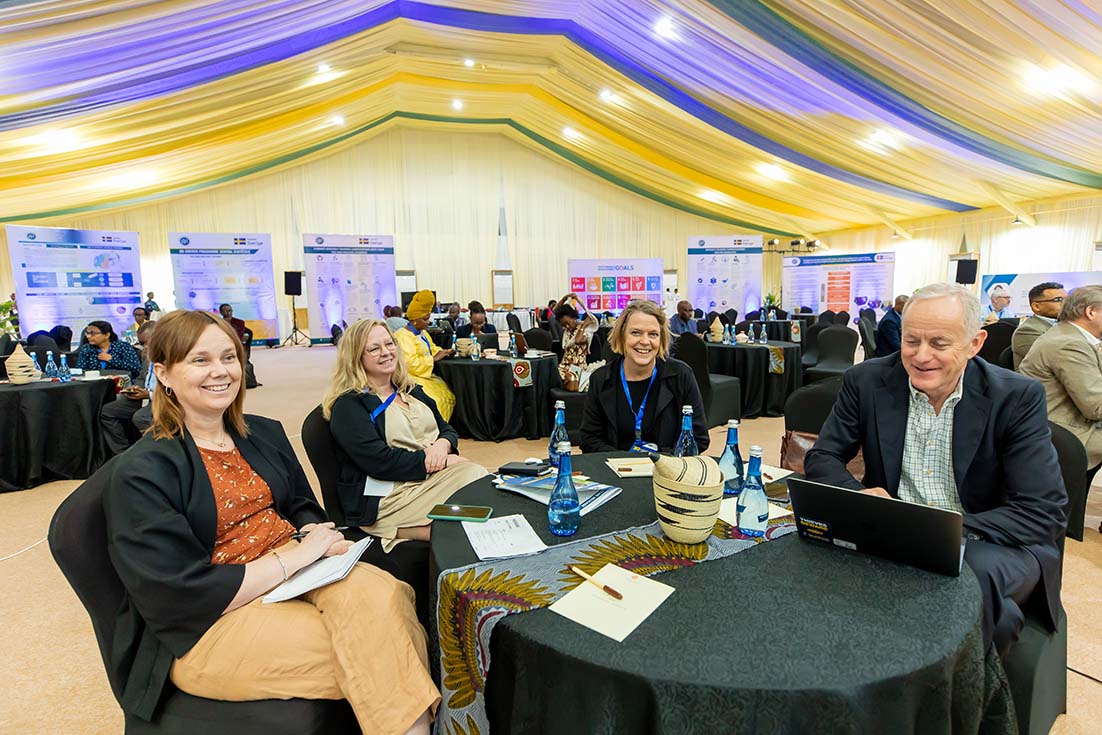
It was a joyful event for participants

Specifically, the two countries celebrated among others 88 PhD graduates (30 females and 58 males) whom the majority graduated from Swedish Universities thanks to the support of UR-Sweden program.

Among graduated PhD holders, some are Ministers, Members of Parliament, Director Generals of different government Institutions, others are active researchers and pro-active academics, whereas others are entrepreneurs or in private sector.
MG5.jpg

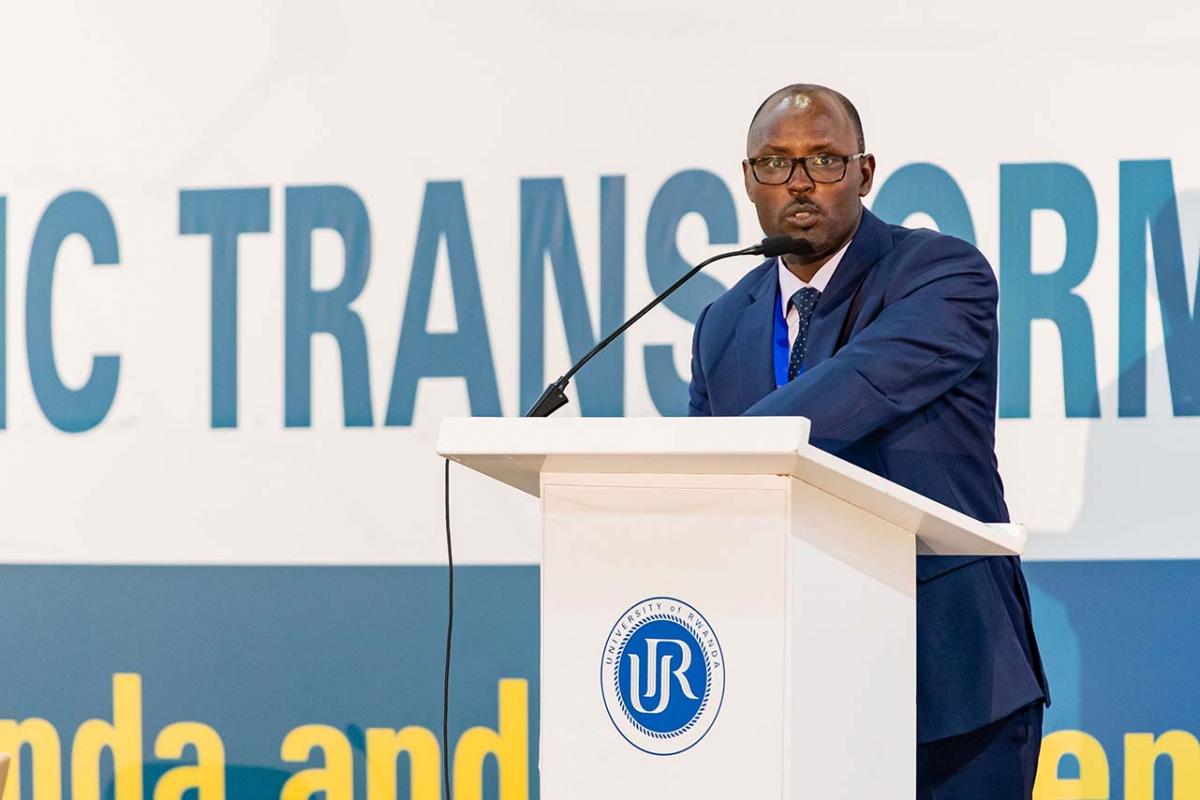
The Vice Chancellor while delivering his remarks

Dr Kayihura Didas who is the Vice Chancellor of the University of Rwanda noted that modern times require modern knowledge that informs not only policy makers but whoever is committed to development.

“We feel excited to see that people training through the UR Sweden Program are valuable enablers now, some of whom are policy makers and others are great entrepreneurs” he said, adding that if the Rwandan economy is going to grow even faster in future it will require consistent investment in research and professional skills development.

In terms of research, the UR-Sweden Program supported research projects that resulted in 2121 publications from 2013 to 2022. 2842 citations are on record from 2013 to 2018. 719 projects were published in ISI journals (from WoS). 239 researchers attended international conferences. Out of 377 active researchers, 90 are females while 287 are male researchers. Among research grants offered, 36 are ordinary research grants, 26 post-doctoral research grants, 13 local PhD research grants, while 49 are interdisciplinary open female grants.
dvc.jpg

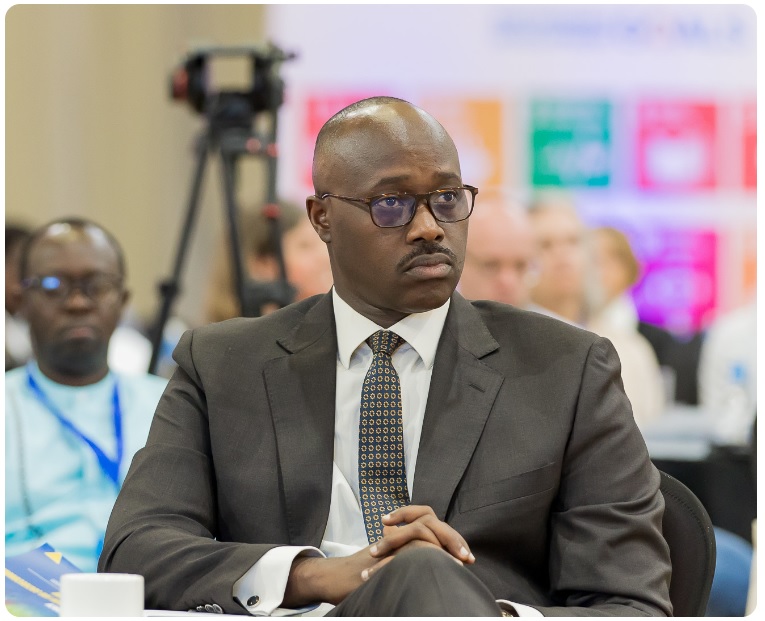
The Mayor of City of Kigali was also in attendance

Currently, UR supports 76 PhD students and 11 Postdoctoral students. The Program has also significantly impacted the University of Rwanda towards its capacity in terms of PhD Program training. The University of Rwanda now boasts PhD programs in five different fields with over 25 students enrolled in those programs. The programs are in the areas of Economics, Management, Peace and conflict, Mathematics and Agriculture.
UR brings together researchers and industry practitioners to share research results on the effect of COVID 19 on economic development

Around 100 academics, researchers and industry practitioners are gathered at UR for the 5th International Conference of East Africa Business and Economic Watch (EABEW) under the theme “Sustainable Development- a Post-Pandemic Future. Over 2 days, participants discuss scientific research papers in areas of economics and business management. Presentations explore among others the impact of COVID 19 pandemic especially its implication on social economic development.

The conference attracted participants from 17 countries who present new researches with new evidence that will assist policy and development of countries amid and post-pandemic period. Part of key partners and institutions’ delegates who participated in this conference are from Makerere University, UDBS and School of Economics at the University of Dar Es Salaam, College of Business and Economics at Addis Ababa to mention but a few.

Among participants in the conference include Dr Victoria Hauwa Ibrahim who attended from Nigeria. In her research, she explored repercussion of social economic situation caused by COVID 19 in Nigeria which can also be associated to the rest of sub-Saharan Africa. Her research looked at foreign remittances and foreign direct investment as a model of finance in the Health sector.

number 1_0.jpg

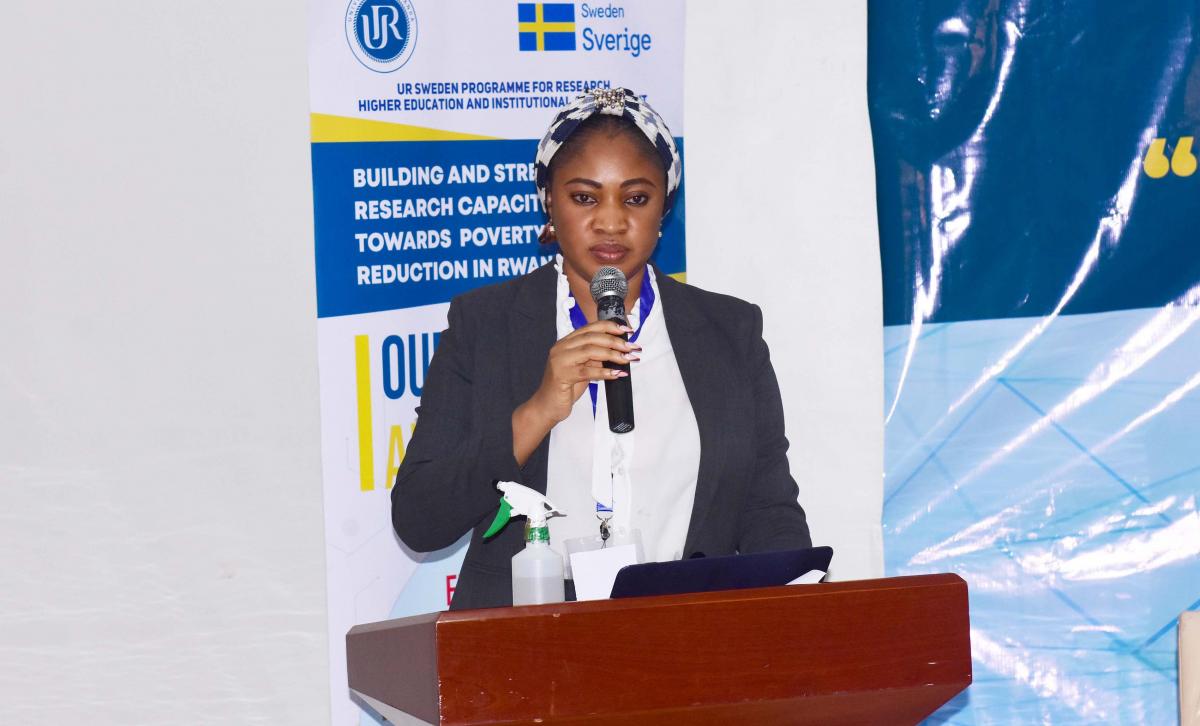
Dr Victoria Hauwa Ibrahim during her research presentation

“We are looking at health insurance scheme for it to be more elaborate to capture all the people especially those in rural areas,” she noted, adding that findings showed that foreign remittances did not have significant impact in health care financing and health care development.

In his remarks Lars Hartvigson who is the Director of International Development Cooperation at Jönköping international Business School noted that the purpose of the conference is to be a stepping stone for the University of Rwanda to become a research led university. He also asserted that the conference is an opportunity for researchers to catch up again after COVID 19 pandemic while linking Rwanda with other African countries.

“The outcome of the conference is so important for policy makers and politicians to make use of the research results” He said.

Since the launch of the conference five years ago, more than 300 research papers have been produced while at least 58 research papers will be discussed this year. The conference was organized in collaboration with Jönköping international Business School under the financial support by UR-Sweden Programme.

dsc_4963.jpg

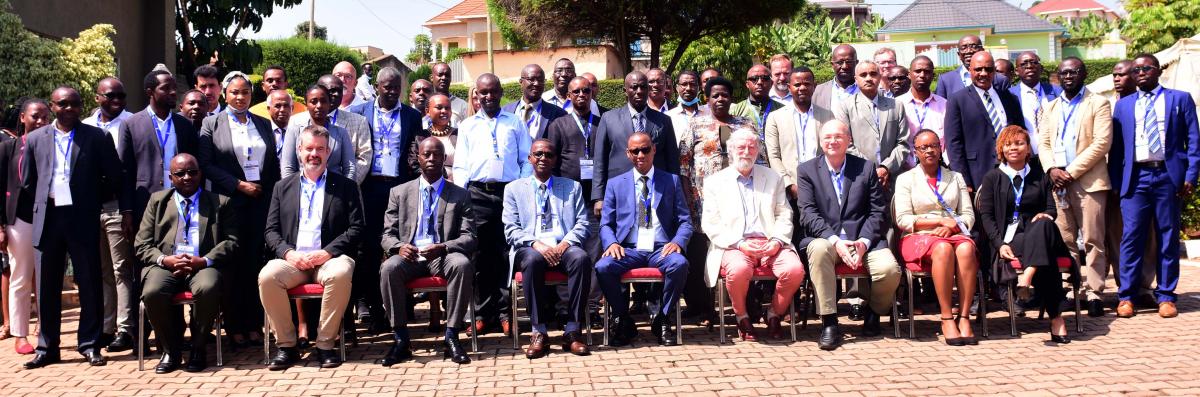
Participants group photo

UR-Sweden Program looks on promoting research culture for socio-economic transformation

The UR-Sweden Programme has been hailed by the ministry of education for contributing to Rwanda’s socio-economic transformation over the past 20 years and the next five years through promoting research and PhD studies. The Program contributes to the development of Rwanda and poverty eradication through research support to the University of Rwanda. It is the largest and most comprehensive externally funded Institutional Program at the University of Rwanda. 

DSC07567.JPG

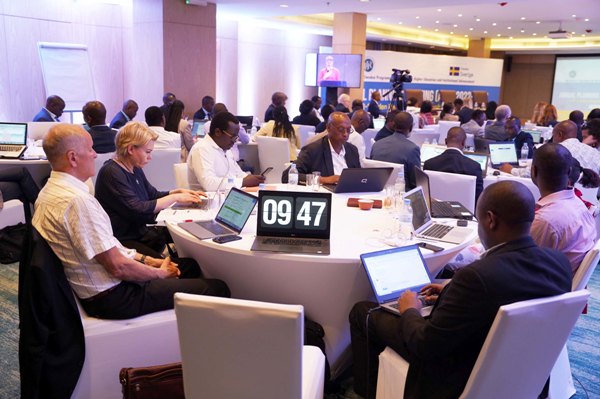
Participants during the meeting 

While officially opening the annual review meeting of the UR-Sweden Programme on Tuesday May 17, the Minister of Education ,Valentine Uwamariya underlined the research impact being developed towards Rwanda socio-economic transformation by strengthening local PhD programme.

The five-day meeting-which brought together team leaders of research and support subprograms from university of Rwanda and partner universities in Sweden-aims to define and discuss implementation of the programme activities that will mark the year 2022-2023.

The project aims to build capacity among academic researchers at university of Rwanda. Up to date the partnership has around 85 PhDs holders of whom 29 are female that graduated from this programme.

EC1A9288.JPG

Remarks by Hon. Minister of Education 

“ We want to strengthen the local PhD programme so that we achieve the targets we have in the agreement. We are discussing how we can strengthen the research capacity to have a good number of PhDs graduates but also how their research findings are impacting the socio-economic transformation of the country,” Minister said.

Johanna Teague, the Ambassador of Sweden to Rwanda noted that the partnership looks to ensure that built research capacity can be used in the development of Rwanda by allowing policy makers and entrepreneurs to have access to knowledge and be able to make informed decisions.

EC1A9261.JPG

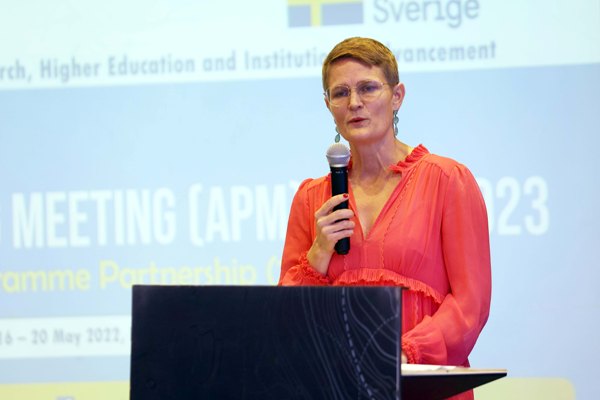
H.E Johanna Teague, the Ambassador of Sweden to Rwanda was also present 

“We are strengthening higher education for impact through strengthening local PhD Programme. We will continue to strengthen research for impact for the development of the country,” she said.

Strengthening local PhD programme is part of a 5-year cooperation deal to boost research and professional skills development.

Papias Malimba Musafiri, the Deputy-Vice Chancellor for Strategic Planning and Institutional Advancement at University of Rwanda said that the first phase of the UR-Sweden programme looked at strengthening the Master’s programme as lecturers could be sent to Sweden for Master’s degrees.

In the second phase, the Master’s programme candidates were locally trained by Sweden universities.

In the third phase, most of the lecturers went for PhD programme in Sweden while in the fourth phase, the PhD candidates will be trained locally at University of Rwanda by Sweden universities experts.

“Strengthening local PhD programme will save cost. The cost that could be spent on one PhD candidate in Sweden can now be spent to train five people locally. This will help us to increase the number of PhDs holders,” he explained.

He said that the activities planned in the year 2022-2023, under the five-year programme, include admitting new candidates for PhD level and post-doctorate studies.

The five-year phase, which is 4th phase, is expected to train 80 PhD candidates compared to 52 PhD that were enrolled during the previous phase 2013-2018. They will be trained both at UR and in Swedish varsities on Sandwich mode.
Apart from PhD training, master’s programmes will also be supported in collaboration with 14 Swedish partner universities. At least 26 postdocs, and more than 240 Masters Students will also be trained. This is done through competition and open for all university of Rwanda lecturers. The activities also include establishing ICT-based infrastructure to boost education among other priorities.

We are also looking for research and innovation activities for students by providing grants,” he added.

Screenshot (430).png

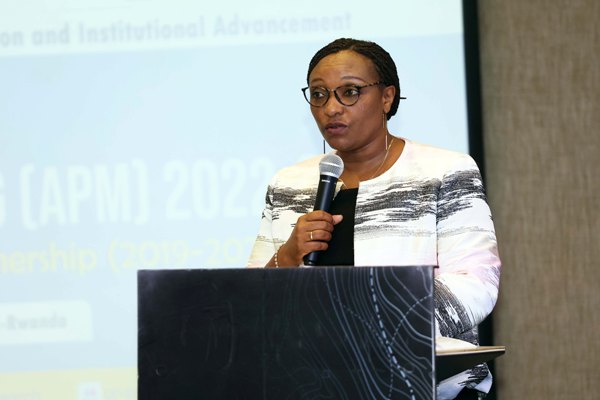
Dr Papias Malimba, the Deputy Vice Chancellor for Strategic Planning and Institutional Advancement 

The University of Rwanda was, in 2019, granted Rwf31,5 billion by the Government of Sweden to boost research and use of scientific knowledge in Rwanda under the existing UR-Sweden Programme.This is expected to build capacity for UR to deliver on the Rwanda National Development Agenda.

The 4th phase will equally support ICT infrastructure, which will integrate research, students, administration and finance in order to alleviate university services and make sure that research can be conducted in a relatively conducive environment.
The current phase includes 14 research training programmes and five research support programmes.

Expected impact

Although the higher education sector in Rwanda has grown significantly in terms of number of students, programs, and institutions during recent years, there is still a lack of qualified staff that can conduct research, engage with policy makers, and offer students in Rwanda high quality postgraduate education.

Sweden’s research collaboration with Rwanda addresses exactly this and we see the Program, which is the largest in the higher education sector, as a pillar in Rwanda’s efforts to make the transition to a knowledge-based economy.

The five-year activities aim to increase production and use of scientific knowledge of international quality that contributes to Rwanda’s development.
It is aimed to contribute to the establishment of an environment more conducive to research and postgraduate training at the University of Rwanda, increase the number of PhD and Masters Holders in Rwanda, increase the quantity and quality of research conducted at the University of Rwanda.

It also looks at increasing the use of research and competences produced within the Programme, in political decision and policymaking in Rwanda as well as the use of research and competences produced within the Programme, by the Rwandan society at large.

The story contains some excerpts from article published in the New Times. You can read the original story here

Configure