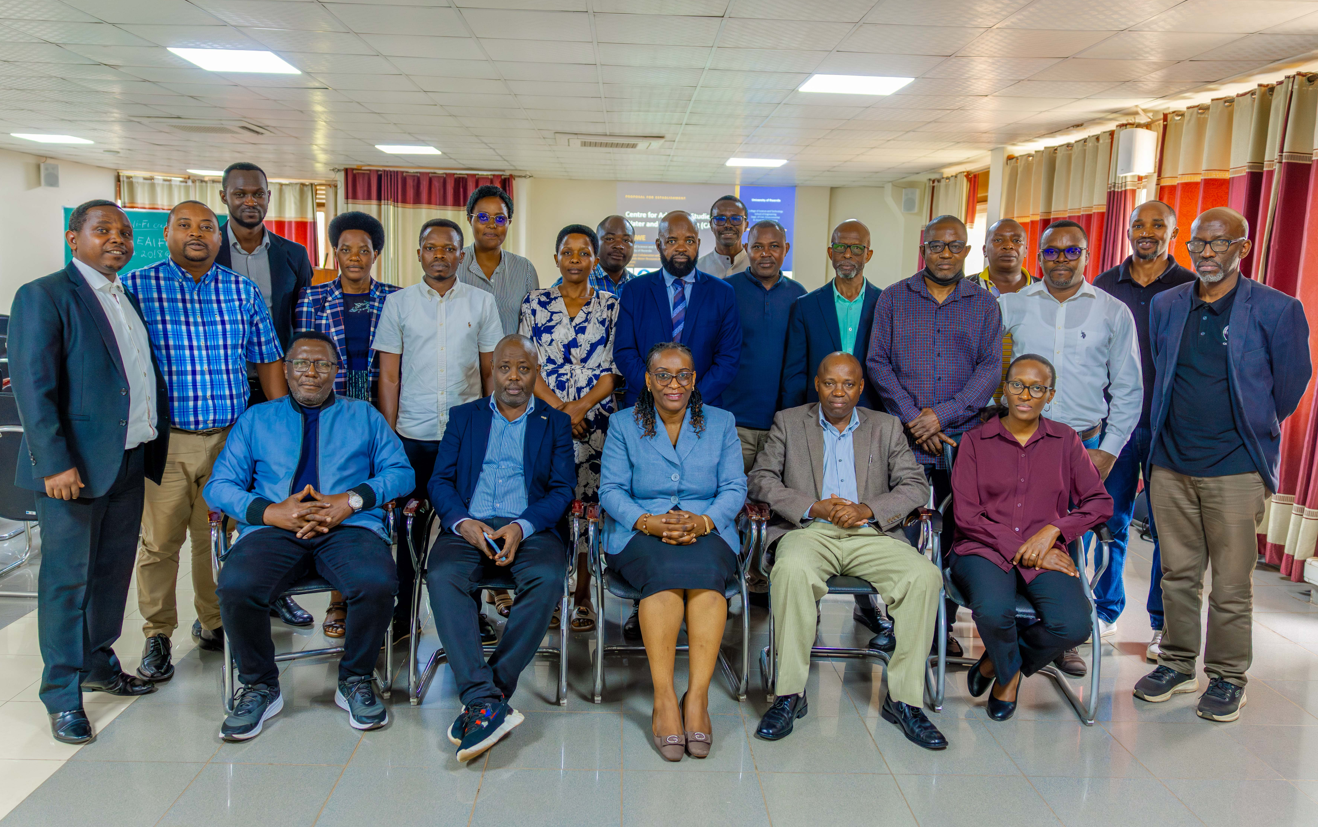
A stakeholders’ consultation workshop was held at the College of Science and Technology to consolidate ideas for the establishment of the Centre for Advanced Studies in Water and Environment (CASWE). The process is supported by the UR–Sweden Programme under its subprogram, Enhancing Water Resources and Environmental Management for Sustainable Livelihoods in Rwanda (E-WREM-SLR).
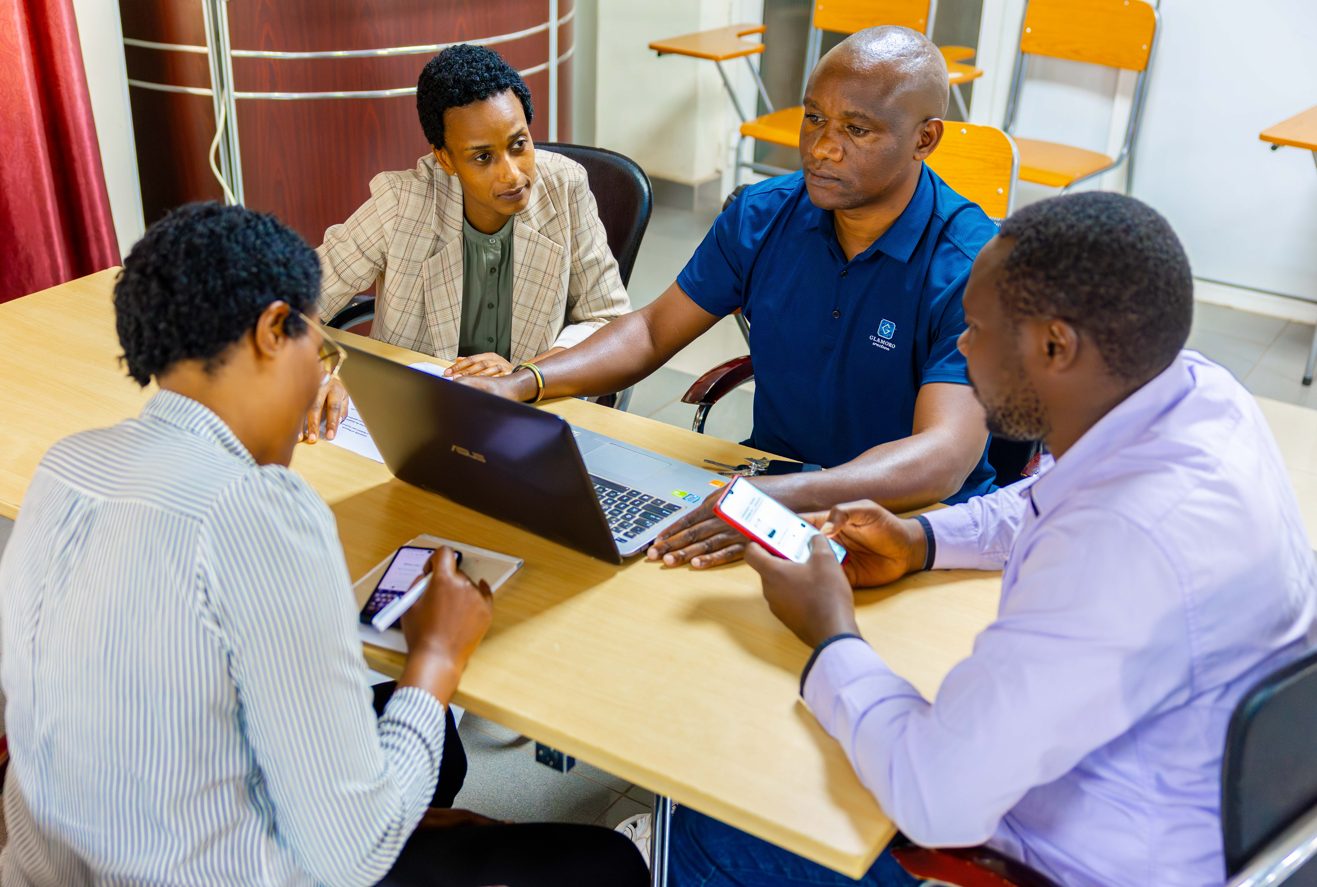
The workshop discussed and deliberated on four key components, namely the Centre’s governance and institutional positioning, academic programmes and research focus, resource mobilization and partnerships, as well as infrastructure, staffing, and sustainability.
Addressing participants, Prof. Umaru Garba Wali, an expert in water and environmental engineering leading the Centre’s establishment process, highlighted that CASWE will tackle critical challenges such as deforestation, erosion, wetland encroachment, and agricultural runoff, which contribute to sedimentation and ecosystem degradation. He also noted that the Centre aims to bridge existing gaps in technical, analytical, and institutional capacity for effective planning, management, and regulation of water resources.
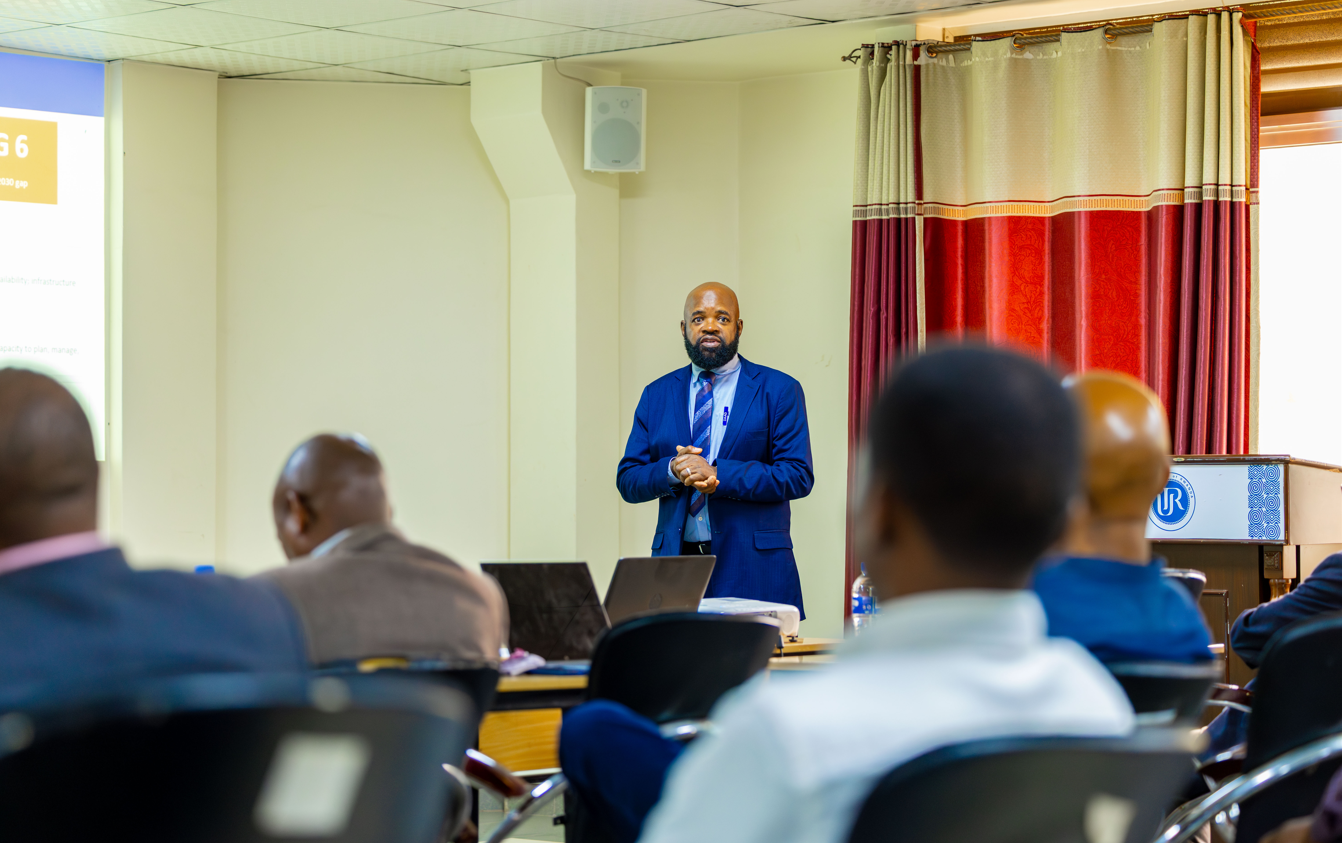
Speaking during the workshop, the Dean of the School of Engineering, Prof. Léopold Mbereyaho, emphasized the urgency of stakeholder engagement to ensure the Centre is purposefully designed as a national and regional asset capable of addressing pressing water and environmental challenges.
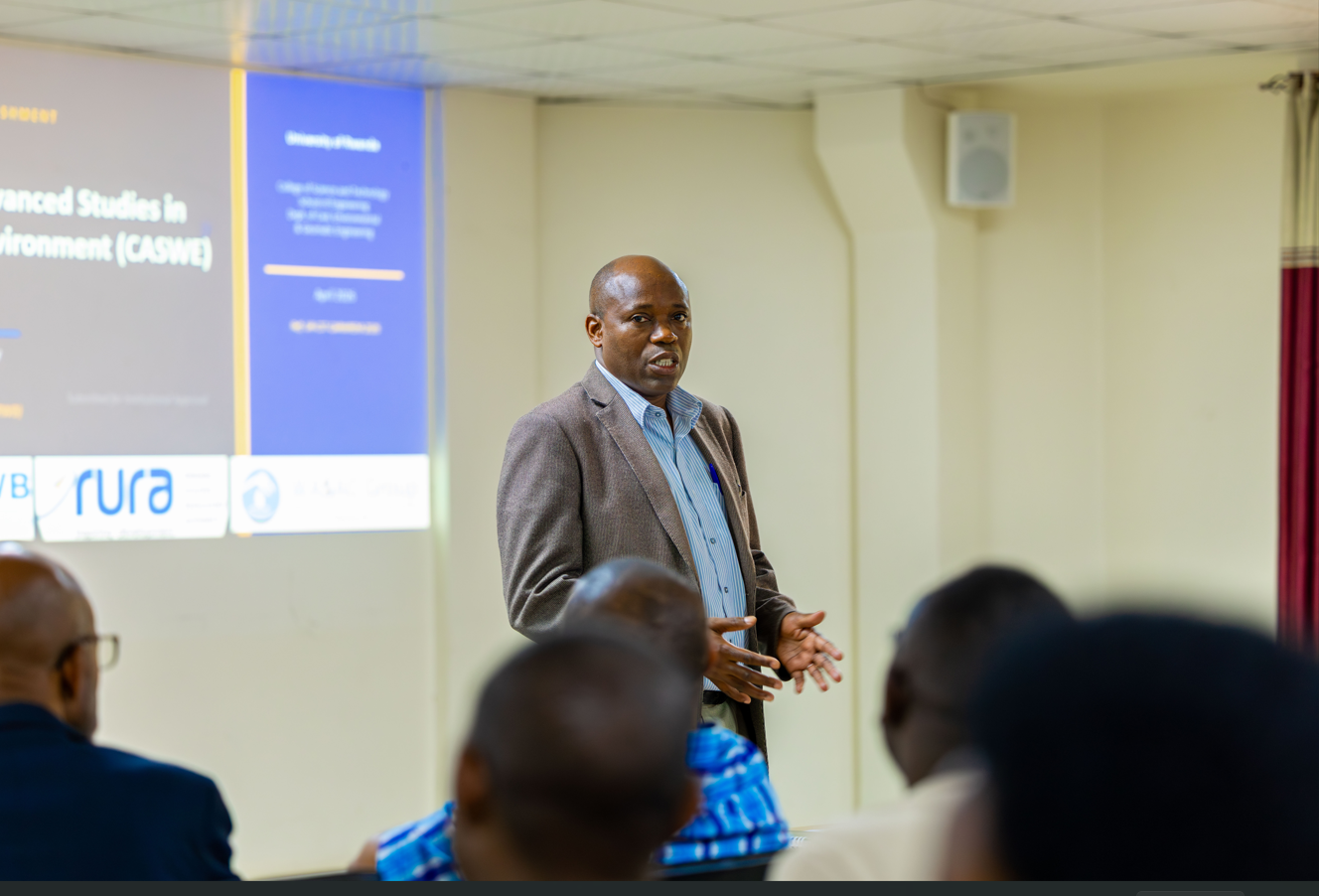
“The multidisciplinary composition of participants reflects the complexity and cross-cutting nature of water and environmental issues, requiring dedicated expertise to ensure the Centre meets the required standards,” he said.
CASWE is envisioned to advance knowledge and deliver interdisciplinary, solution-oriented research and training in water resources and environmental management. It will support Rwanda’s sustainable development through scientific research, policy engagement, and inclusive capacity building.
To achieve this, the Centre will prioritize interdisciplinary research, introduce academic programs at Master’s, PhD, and postdoctoral levels, as well as offer tailor-made professional training. These efforts will be strengthened through strategic partnerships with government institutions, industry, and international academic networks.
In the spirit of strengthening academia–industry linkages, the Centre has been designed and will be implemented in close collaboration with key institutions such as the Rwanda Water Resources Board, the Rwanda Utilities Regulatory Authority, and WASAC.