LATEST NEWS

Academics and researchers meet to reflect on regional challenges- 25 years after the Genocide against Tutsi

Over 120 Academics and researchers meet for the 9th International two day Conference on the Great Lakes Region. Under the theme “25 years after the Genocide against the Tutsi: Current Status, Challenges and Perspectives for the future”, the conference aims  at providing concrete recommendations to key national, regional and international actors for the prevention of and response to genocide ideology in the Great Lakes Region and beyond. It is organized by UR Centre for Conflict Management-CCM under the support of UR-Sweden Programme.

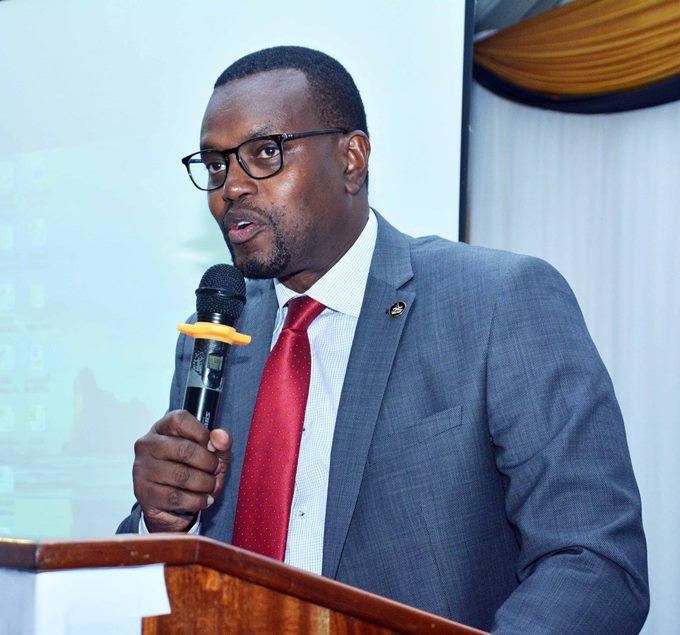
The keynote speech was delivered by Jean Bosco Mutangana, Rwanda Prosecutor General who recounted the achievements made by the Government of Rwanda in the pursuit of justice. He explained that the traditional courts known as Gacaca played a significant role to establish reconciliation, accountability and justice after the Genocide against the Tutsi. Mutangana noted that in its closure, Gacaca had tried close to two million suspects in 10 years after its establishment with a budget around to 50M USD. According to him, this is a huge milestone as opposed to ICTR that only tried 75 individuals in 18 years with an estimated budget of 170M USD.
DSC_0683_0.JPG

Keynote speech by Jean Bosco Mutangana, Rwanda Prosecutor General

“Rwanda has learnt how to find solutions from multiple problems and using the available means” He said.

Mutangana also highlighted the challenge of propagation of genocide denial which remains open and unpunished in some countries. According to him, some countries consider genocide denial as a right of free speech and expression of opinion. This shows lack of demarcation between freedom of speech and hate speech towards genocide ideology.

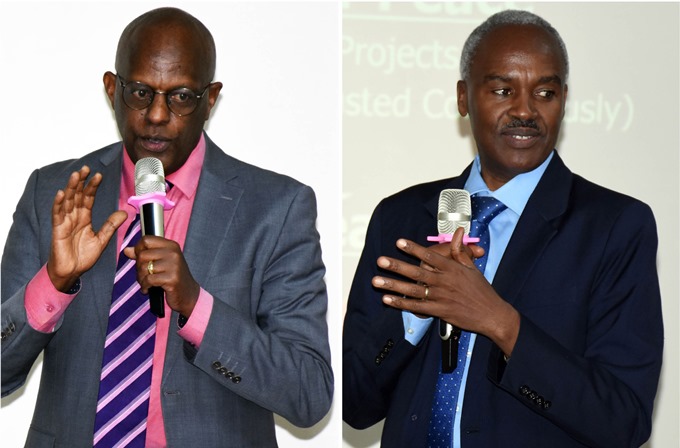
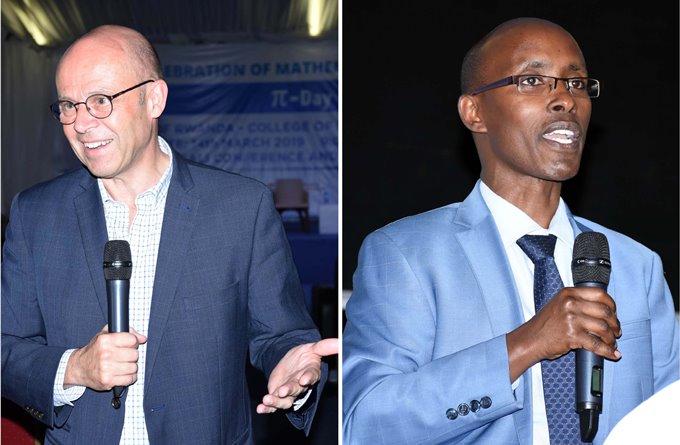
In his remarks, Dr Aggée Shyaka Mugabe, the CCM Director noted that the conference is in line with the Centre mandate to revitalize research with a particular focus on genocide and peace processes. He informed participants that CCM is restructuring itself to become a reputable regional centre of knowledge production. 
multiphoto_3.jpg

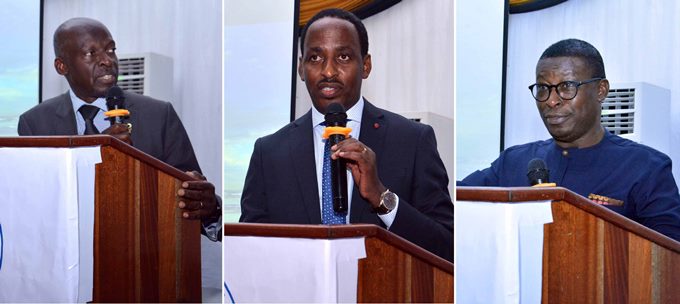
From L-R : Prof Nelson Ijumba, Dr Dr Aggée Shyaka Mugabe and Prof Tony Karbo

Speaking on the occasion Prof Nelson Ijumba commended CCM for its critical role in generating scholarship around conflict, security, peace and genocide. Ijumba who is the UR Deputy Vice chancellor for Academic and Research noted that the Great Lakes has been an area of conflict for many reasons. Thus, it is imperative to create scholarship and try to understand underpinning reasons so that people can avoid future conflict happening in the region.

Among speakers in the conference include Prof Tony Karbo from N'Zarama Peace Building in Ivory Coast. In his presentation, he paid tribute to the Government of Rwanda for being exemplary in terms of developing and nurturing partnerships. He also said that CCM has been relentless in its efforts to engage in deep issues of violence and conflict in the great lakes region. Karbo called for reflecting on the significant economic organization by looking on the realities of African people to whom governments deliberately fail to address issues of poverty and development.
multiphotos_4_landscape-3.jpg

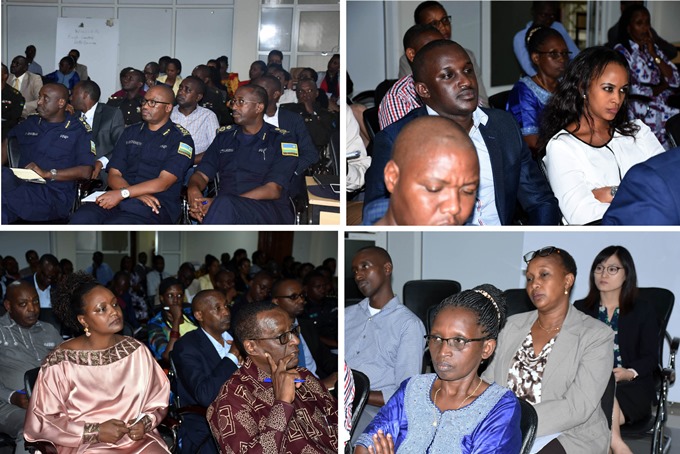
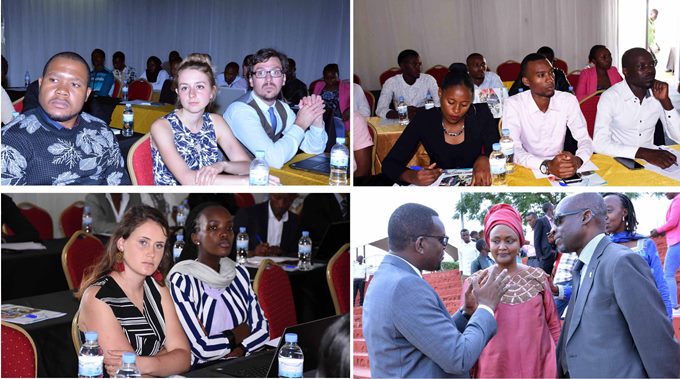
Participants in the conference

By  Darius Murangwa
Communications Officer
Academics in the society have to take the lead in peace building process-Prof Shinoda

The University of Rwanda College of Arts and Social Sciences hosted a public lecture about Japan peace building which was delivered Prof Hideaki Shinoda. The lecture was organized by UR Centre for Conflict Management- CCM under the support of UR-Sweden Programme/ Peace, Conflict and Development Studies SubProgramme. Prof Shinoda talked about how Japan got the better of internal and external wars and political turmoil to become one of the world's most industrialized countries with best political and economic stability.

During the lecture, Prof Shinoda discussed the history of Japan before and after the 2nd World war. He explained that Japan took bold decisions which were not necessarily supported by the general public but eventually paid off. He added that the major tasks by Japanese politicians in the aftermath of the world war were to address the disruption of domestic society and introduce counter measures against potential colonization from the West.

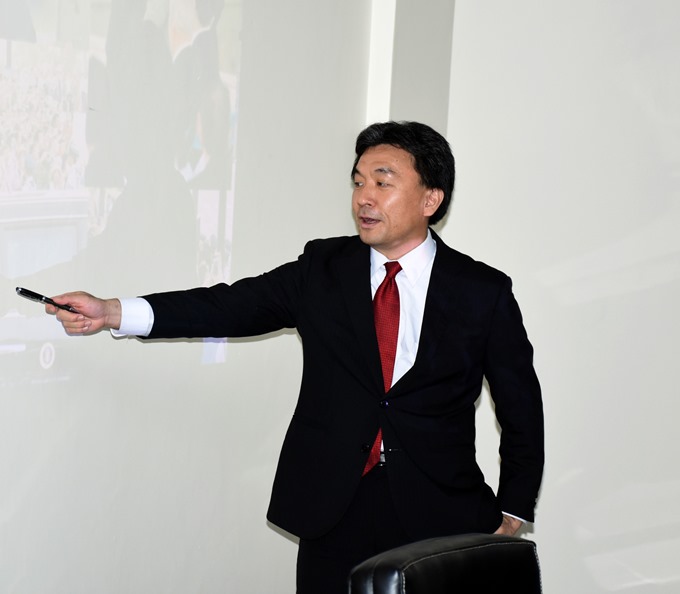
DSC_8521.JPG

Prof Shinoda during his presentation

Prof Shinoda also noted that academics in the society have to take the lead to identify and analyse problems which will help the practitioners to better understand them.

“Debating should be part of academics job, bring different views, aiming to influence decision makers and general public so that they may make informed decisions,” said Shinoda who is a Professor at Tokyo University of Foreign Studies and also doubles as the Director, Hiroshima Peacebuilders Centre. 

In the aftermath of the 2nd world war, Japan resolved to become a peaceful country with a condition of not being colonized and disrupted. According to Shinoda, Japan is always cautious about the past failure and continue to build on the previous generation who did well to navigate Japanese people in the nice manner.

Concerning the Rwandan history, Prof Shinoda informed the audience that, with the Genocide against Tutsi, Rwanda almost went through the same tragic history as Japan. He commended measures introduced after the Genocide to avoid any confrontation within domestic society. He concluded by acknowledging Rwanda international engagement through international peace keeping which is a way to reinforce benevolent and good will to contribute to international peace and security.  

Speaking on the occasion, Prof Amb. Emile Rwamasirabo drew a parallel comparison between Rwanda and Japan. Rwamasirabo noted that Rwanda and Japan demonstrated an incredible resilience following the tragedy that hit both counties.  Despite different wars, Genocide and conflicts that the two countries went through, there was a resolve and political will to build on peace to achieve  social economic development in a very short time.

Untitled-2_2.jpg

Amb. Prof Emile Rwamasirabo (L) and Amb. Dr Charles Murigande both served as Ambassadors of Rwanda to Japan

“Japan economy was completely destroyed after the 2nd world war, the same scenario hit Rwanda after 1994 Genocide against Tutsi” said Prof Rwamasirabo who previously served as Ambassador of Rwanda to Japan.

Among the participants in the lecture was Amb. Dr Charles Murigande, the UR Deputy Vice Chancellor for Institutional Advancement. He hailed the way Japanese people have been able to build such a peaceful country and a safe society despite the tragic history they went through for many centuries. As former Ambassador of Rwanda to Japan, he testified that Japan is one of the most safe and peaceful country to live in and encouraged the audience to learn from their peace building model. 

multiphotos 4_3.jpg

The lecture attracted a variety of audience


By  Darius Murangwa
Communications Officer
 

The Vice chancellor calls on high school students to join UR amid the celebration of Pi-DAY

For the 2nd consecutive time, the University of Rwanda joined the world to observe the International Day of Mathematics commonly known as Pi-Day (π-day). The event was organized by the College of Science and Technology in collaboration with UR-Sweden Programme, the African Institute of Mathematical Sciences (AIMS) and East African Institute for Fundamental Research.  

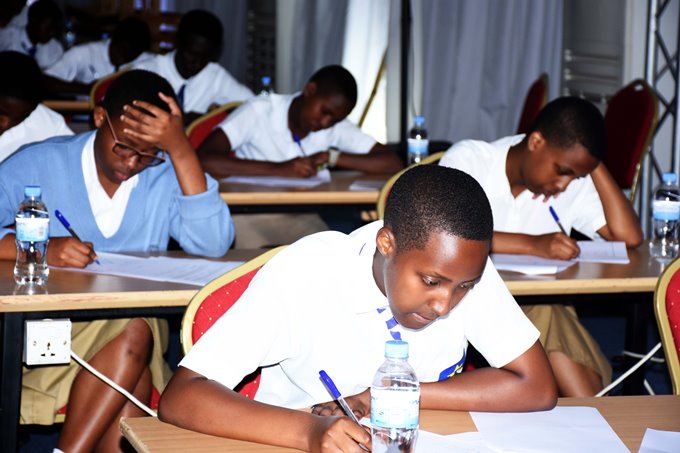
The event featured mathematics competition for secondary students from 24 high schools that culminated with prizes distribution for best performers. It also included lectures by eminent professors of mathematics who made presentations that aimed to popularize mathematics and hence attract more students in Science, technology, engineering, and mathematics areas. 

   DSC_8322_0.JPG

Students during Mathematics contest                  

In his welcoming remarks, Dr Ignace Gatare, the Principal of College of Science and Technology took participants into a series of major breakthrough achieved thanks to the use of mathematics. He further demonstrated that mathematics is behind digital revolution that has improved the way people communicate and conduct business.

“It is difficult to dissociate the progress made by the civilization with mathematics” Gatare said

Speaking on the occasion, Prof Phil Cotton the UR Vice Chancellor encouraged students to consider joining the University of Rwanda. He informed them that UR is a place where they will meet people who will inspire and groom them in the field of science and help them becoming the best human being who will contribute for the development of the nation.

Untitled-2_1_0.jpg

Prof. Cotton (R) and Dr Gatare during Pi-Day annual celebration

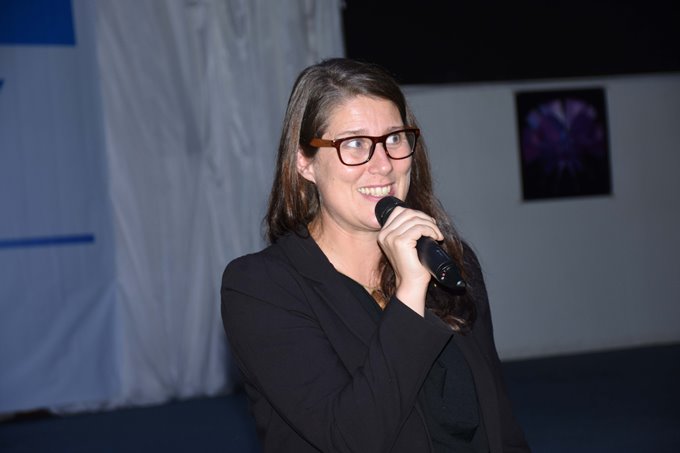
The event also attracted H.E Jenny Ohlsson, the Swedish Ambassador to Rwanda. Despite her modest skills in science, she admitted never doubting the importance of Mathematics because all the new cutting edge technologies have component of mathematics in them.

DSC_8387_0.JPG

H.E Jenny Ohlsson, the Swedish Ambassador to Rwanda.

"Mathematics is the core of innovations and modern technologies that are produced" she said

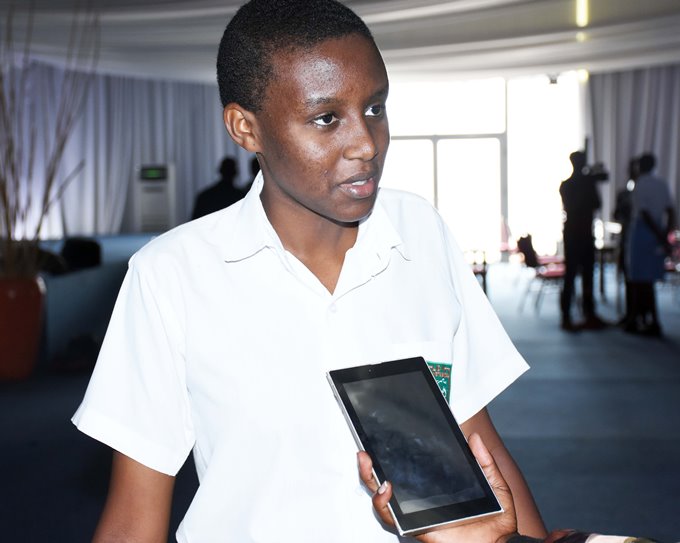
Among the students who participated in the competition include Icyeza Sesame Lorita from Lycée de Kigali. She ruled out the common belief that Mathematics is a tough subject; she only called for giving it time, dedication and passion like any other subject. Icyeza who is in senior 6 challenged parents to encourage children in the early stages because, according to her everyone loves mathematics.

DSC_8355_0.JPG

Icyeza Sesame Lorita a student from Lycée de Kigali

With regard to Mathematics competition, Munezero Aimé Cedric emerged the winner. He is from Ndera Minor Seminary and was awarded $500 and an Ipad.

By  Darius Murangwa
Communications Officer