LATEST NEWS

The Program graduate named to lead World Bank funded Centre of Excellence in energy at the University of Rwanda

Dr. Charles Kabiri was appointed Director of the Centre of Excellence in Energy for Sustainable Development-ACE-ESD, hence replacing Prof. Etienne Ntagwirumugara who has been leading the Centre from its establishment in 2016. The ACE-ESD is one of the four centres of excellence funded by the World Bank at the University of Rwanda.

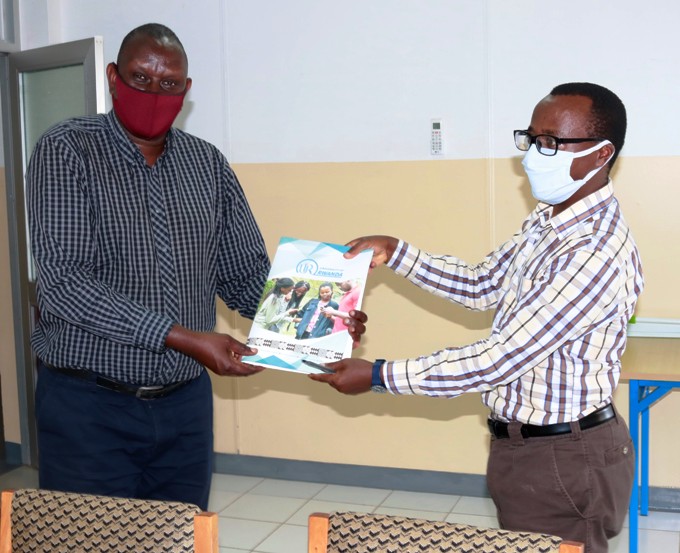
In a handover Ceremony that took place at the Centre, the outgoing Director Prof. Etienne Ntagwirumugara said that during his directorship, the Centre has made tremendous achievements and he is quite sure that the incoming Director will keep the Centre moving forward.
okkk.jpg

Prof Ntagwirumugara during the handover ceremony with Dr Kabiri (Right)

He highlighted that under his leadership, new projects were developed and won grants mainly the 250, 000 USD grant for the establishment of the incubation Centre, a facility which is meant to bridge the gap between academia and industry by supporting students/universities and industry from African Countries to create new markets that, fits the needs of African society.

“You need to ensure that this project is successful as it is still a baby. You were here as Deputy Director, you have all information about these projects and I am ready to support if needed as I am still here supervising some PhD students”, Prof. Etienne Ntagwirumugara said. 

In his remarks, Dr Charles Kabiri commended the work done by the Director and assured that he will do his best with the Centre team to keep the Centre excelling. “We have a strong team, we have capacity and resources; we will try our best to make sure the Centre keeps on growing. DrKabiri said, adding that the Centre will keep on benefiting from Prof Etienne‘s experience.

Who is Dr. Charles Kabiri?

Dr. Charles Kabiri received the BS Degree in Electronics Engineering from the National University of Rwanda, in 2006, the MS Degree in information and communication systems from the Huazhong University of Science and Technology, China, in 2010.

Kabiri got a PhD in Telecommunication Systems from the Blekinge Institute of Technology, Sweden, in April 2015. His doctoral studies in Sweden were funded through the existing research cooperation between the University of Rwanda and the Government of Sweden under the coordination of UR-Sweden Program.

He currently doubles as a lecturer in Electrical and Electronics Engineering Department, College of Science and Technology, University of Rwanda. Prior to being appointed Director of the Centre, he was Deputy Director of the same Centre from its establishment in 2016.
UR, INES and REMA team up to develop effective research for evidence based policy making

Research team from the University of Rwanda (UR), Institute of Applied Sciences (INES-Ruhengeri) and Rwanda Environmental Management Authority (REMA) are convened to devise ways to develop a 5 year research plan that will address national and global development challenges. The trio is expected to come up with concrete joint research plan which, in one hand will generate knowledge and inform policy while promoting academia-industry linkage. The meeting follows a science discussion that was held at REMA which brought together REMA staff and the team of researchers composed by UR and the Swedish Institute of Agricultural Science (SLU). The two universities are already implementing the subprogram called Engendering Rural Transformation for Sustainable Development (ENTRUST) of the UR-Sweden Programme.

According to Prof Alfred Bizoza who is the ENTRUST team leader, the collaboration will trigger quality services to the Rwandan Citizens in addressing the most pressing challenges that fall into REMA mandate. The move will also see the link between research and policy strengthened mainly in the area of environment and sustainable development by ensuring that conducted research can effectively inform the evidence based policy making.

“The collaboration is in line with the University mandate to educate and produce high qualified graduates who would support the policy formulation and its implementation” Bizoza said.

Amb. Dr Charles Murigande labelled the meeting an important milestone for both the University of Rwanda and the country. As a university that strives to be a research-led institution, Murigande noted that through the collaboration, UR is poised to be a key player in addressing the developmental challenges of Rwanda through generating knowledge with direct impact to the people of Rwanda and beyond.

“Primarily as a public institution, our priority should be to address challenges that Rwanda is confronted with” said Murigande who is UR Deputy Vice Chancellor for Institutional Advancement.

Speaking on the occasion, Eng. Coletha Ruhamya, the Director General of REMA hailed the collaboration which will complement the vision 2050 and other international and national obligation that her institution wants to achieve. Ruhamya further stated that the initiative will promote local researchers who are much reliable since they understand the culture and context of the country in which they are operating from.

The collaboration will result into research with direct link to policy in thematic research areas such as : •Agro ecology intensification and agro diversity •Climate Change and Variability •Biodiversity and Ecosystem.

Newly admitted PhD students and post-doctoral researchers in Sweden urged to uphold the culture of innovation and creativity

DSC_9648_0.JPG

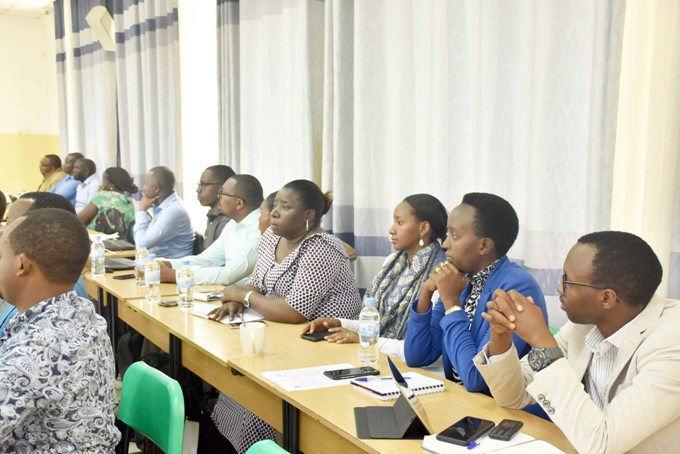
A section of PhD nominees who will soon undertake studies in Sweden

41 doctoral students and 26 post-doctoral researchers who will soon be enrolled in 14 Swedish Universities were taken through an induction exercise aiming at explaining to them expectations out of their studies in Sweden. The function was organized by UR Sweden Programme in collaboration with International Science Programme (ISP) within the existing research cooperation between Rwanda and Sweden. This is the 4th phase of the cooperation which aims to boost UR capacity building in research and deliver on Rwanda National Development Agenda.

In his remarks, Prof Phil Cotton, the University of Rwanda Vice Chancellor asked the newly admitted PhD students to be creative individuals with a complete set of skills and knowledge and judicially use them in different aspect of their professional lives and careers. He also urged them to be creators by not only creating new things but also grow and nurture practices in place.

DSC_9639.JPG


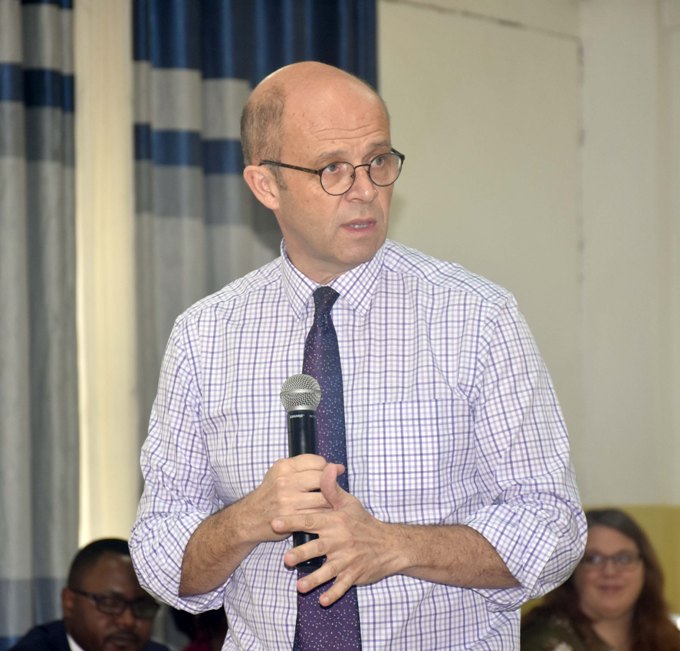
Prof Cotton in his address to newly admitted PhD students

“You also need to exhibit compassion in your different areas of specialization in the way that you use your knowledge and skills to better the nation and people that you serve” Cotton added.   

The induction exercise was attended by Ms Anne Höglund, the Acting Head of Mission for the Swedish Embassy in Rwanda. He informed that industrialization and access to natural resources wouldn’t have been enough for Sweden to prosper if there wasn’t a huge investment in education for all and high quality of research leading to innovation in several areas.

DSC_9654.JPG

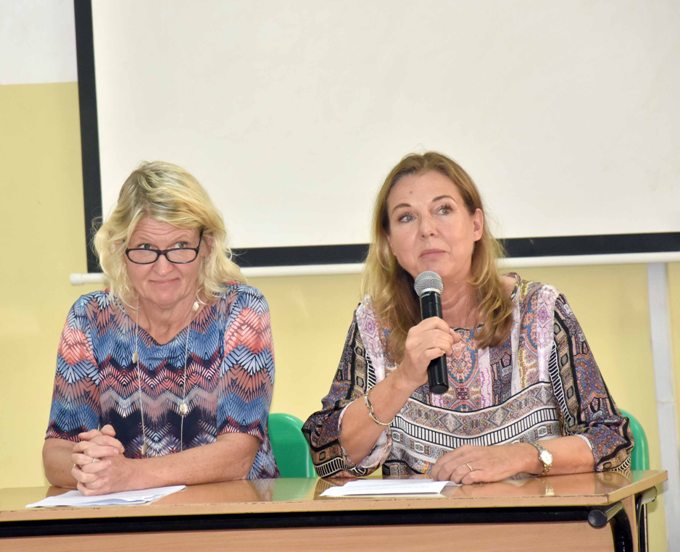
Ms Anne Höglund while delivering her remarks

“Knowledge and skills are essential for any country’s development” she said, adding that Swedish support to Rwanda is meant to build up Rwanda own capacity in research but also in other areas such as agriculture, health and others.   

Speaking on the occasion, Mr Raymond Ndikumana noted that the UR-Sweden Programme is built around skills development through PhD and Post-doctoral training which takes 66 percent of the total budget. He added that all the other activities through which the Programme is involved such as research capacity building, ICT support and research environment have to trigger change in Rwandan society. 

“The programme is not only about numbers but also about the results and impact it makes for UR and hence for the populations of Rwanda” said Raymond. He added that the Programme has shifted its attention towards interdisciplinary research clusters which are instrumental to deal with the complexity of national and global developmental challenges.

Untitled-1_2.jpg

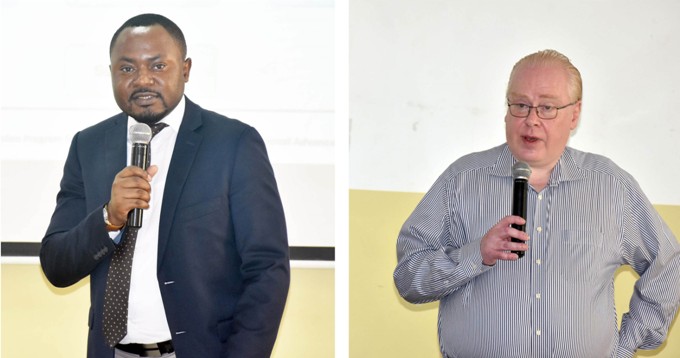
Raymond (L) and Bengt Ove, Programme Coordinator at International Science Programme both addressed upcoming PhD students and Post-Doc fellows