LATEST NEWS

Research and innovation should lead to social impact - Sida envoy

The Senior Research Advisor at the Swedish International Development Cooperation Agency (Sida) commended the research culture being developed at the University of Rwanda. Dr Therese Soop expressed her satisfaction during a 3-day visit to UR in which she discussed with UR officials and researchers the status and impact of research since the establishment of the UR-Sweden Program. Her visit is in line with the existing research collaboration between the Government of Rwanda and Sweden under Sida support, a partnership spanning 20 years now.

Speaking on the occasion, Therese hailed the research and innovation projects that are being conducted at the University of Rwanda. She further noted that both research and innovation should lead to social impact. Therese added that academic environment, innovation processes as well as the aspect of local context are among the key components for research culture to flourish.
story _0.jpg

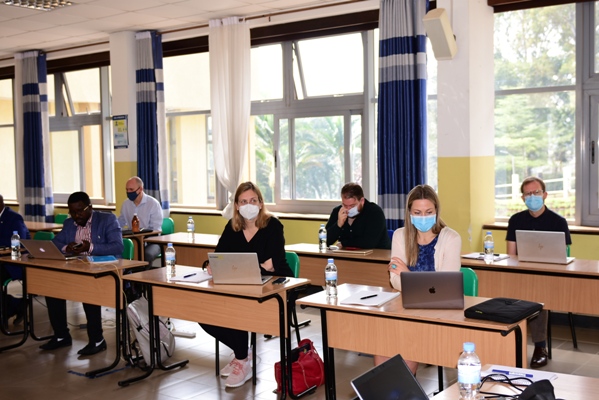
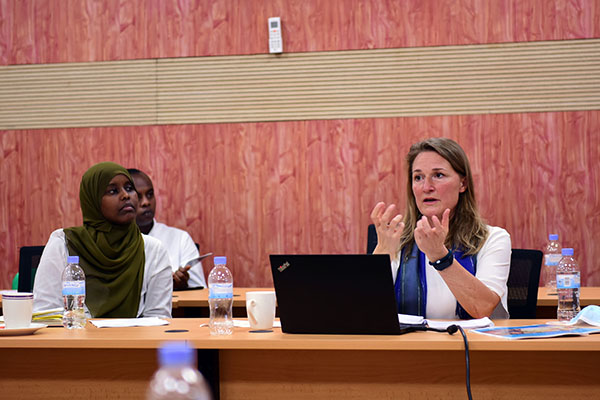
Dr Therese Soop during her visit to UR ; with Dr Barni Nor, Senior Programme Manager for Research and Higher Education at the Embassy of Sweden in Rwanda

Among the research presenters on the occasion included Dr Parfait Yongabo who in his research, explored among others innovation ecosystem in Rwanda and highlighted efforts of Rwanda in developing innovation systems. For the innovation to take place Yongabo urges among others proper interaction among stakeholders (Universities, industries and Government agencies).
ok.jpg

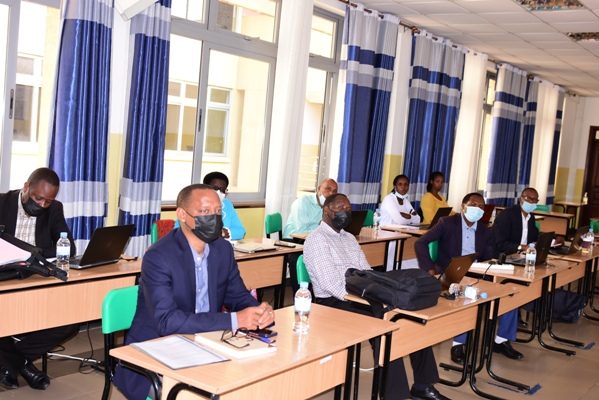
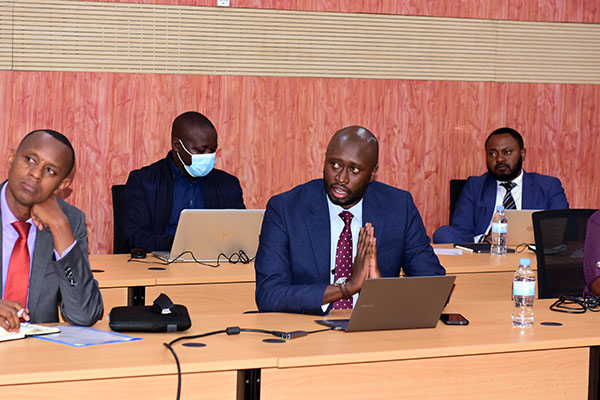
Dr Parfait Yongabo, during his research presentation

Yongabo is a faculty member of the College of Agriculture, Animal Science and Veterinary Medicine, University of Rwanda ; a PhD graduate in Research Policy at Lund University in Sweden. He is among the 81 UR-Sweden Program PhD graduates under the bilateral research partnership between Rwanda and Sweden.

In his remarks, Dr Papias Musafiri who represented UR management in the session said that all the research breakthroughs are guided by UR ambition to be a research led institution. Musafiri who is the Deputy Vice Chancellor for Strategic Planning and Institutional Advancement revealed that UR research in terms of publication has increased, thus contributing to its position as one of reliable research institutions in the region and globally.

The Deputy Vice Chancellor added that UR has embarked on the journey to promote research uptake and ensure that conducted research can inform practices and make a direct impact for the community welfare. He also noted that innovation should be imbedded in the University of Rwanda curriculum, which will ultimately sustain the culture of innovation at all levels.
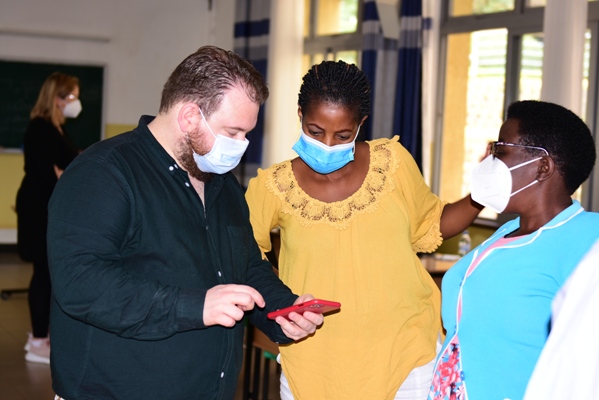
Maiden doctoral students in Management gain tips from their Swedish and UR supervisors

In its quest to build research capacity, the University of Rwanda College of Business and Economics received professors from Umeå University and Jönköping University both from Sweden. The delegation is in the University of Rwanda as part of existing joint research collaboration between Swedish varsities and University of Rwanda under the coordination of UR Sweden Programme together with their counterparts at UR they met their supervised PhD candidates recently enrolled in the locally developed PhD in Management.

DSC_1668.JPG

A PhD candidate (middle) discussing with supervisors

The Swedish delegation was led by Prof. Olof Brunninge who is Academic Director of International Development Collaboration at Jönköping International Business School. He noted that part of their mission at UR is to establish a framework for joint supervision and understanding of the supervisory process by the local co-supervisors and doctoral students. He believes that the experience will be of mutual interest for all the institutions involved in the training and supervision exercise.

news.JPG

A section of Professors who traveled from Sweden

Speaking on the occasion, Dr Pierre Claver Rutayise, the Principal of College of Business and Economics noted that trained PhD candidates are expected to contribute to the research output, which is still low in the field of business compared to other UR colleges. According to him, the move is poised to equip candidates with capacity to produce good and publishable researches.

The PhD in Business under the coordination of the School of Business has so far recruited 6 PhD candidates. All candidates were allocated supervisors from Jönköping International Business, Umeä University, and University of Rwanda College of Business and Economics. Each student is allocated two main supervisors from the two Swedish Universities and one local co-supervisor from the School of Business at UR.

DSC_1657.JPG

PhD candidates and supervisors

The PhD in Management is among local PhD that are funded under the existing bilateral collaboration between Rwanda and Sweden. For this current phase (2019-2024) the program targets to enroll 80 PhD candidates to be trained both at UR and in Swedish varsities on Sandwich mode.

Team leaders meet to assess the implementation of planned activities

Team leaders in Rwanda and their counterpart in Sweden were convened in University of Rwanda Huye Campus to assess and share experience in the execution of planned activities. The exercise, which was organized by the Program Coordination Office of UR Sweden Program, saw the group sharing activities that will mark the second half-year from January 2022 up to June 2022.  

Team leaders.jpg

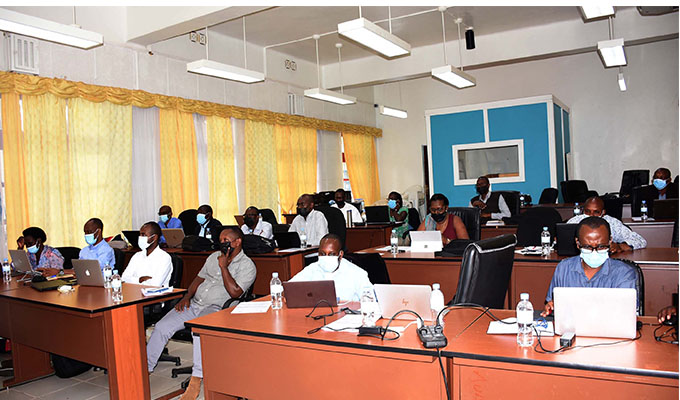
Teamleaders from different subprogrammes during the workshop 

All the team leaders from 17 subprograms were represented. Presentations from subprograms were kicked off with Mathematics subprogram, on old subprogram initiated since the start the Program. Dr Frodourd Minani leads the subprogram together with his Swedish counterpart Prof Martin singull from Linköping University. So far Mathematics subprogram has graduated 7 PhD candidates while 14 are still pursuing their PhD studies both in Rwanda and Sweden.

In her opening remarks, Prof Aline Umubyeyi who is the Coordinator of UR Sweden Program encouraged team leaders to be ambitious but also realistic during their plans. According to her, the workshop is meant to be an opportunity to revisit challenges that might have hindered the implementation of activities for each and every subprogram and devise ways to do better for the next 6 months.

DSC_1188.JPG

Prof Aline Umubyeyi, UR Sweden Program Coordinator during the workshop 

‘If subprogrammes are not performing well, this affects the whole program in the achievement of set objectives,” She said.

Amid the implementation of planned activities, the entire Program faced the common challenge of COVID 19, which disrupted several activities such as field research, travel for PhD students, physical trainings. This also adds to the recruitment for both PhD and Masters students that took time due to new recruitment procedures as well as difficulties associated in finding qualified candidates in different programs.  

The UR Sweden Program is now in its 4th phase that is expected to end in 2024 with possibility of extension. The current phase include 13 research training programmes and five research support programmes. It targets to enroll 80 PhD candidates   who will be trained both at UR and in Swedish varsities on Sandwich mode, 26 postdocs, and more than 240 Masters Students.